The movie’s only moment of pathos involves a 60-foot animatronic monster with no lines
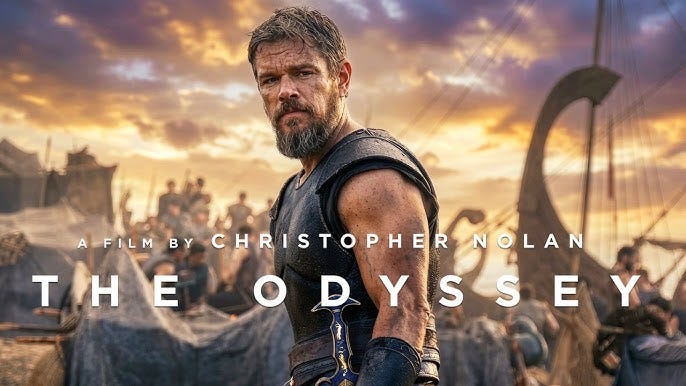
(Mild spoilers ahead for the film version of the poem)
Clinical.
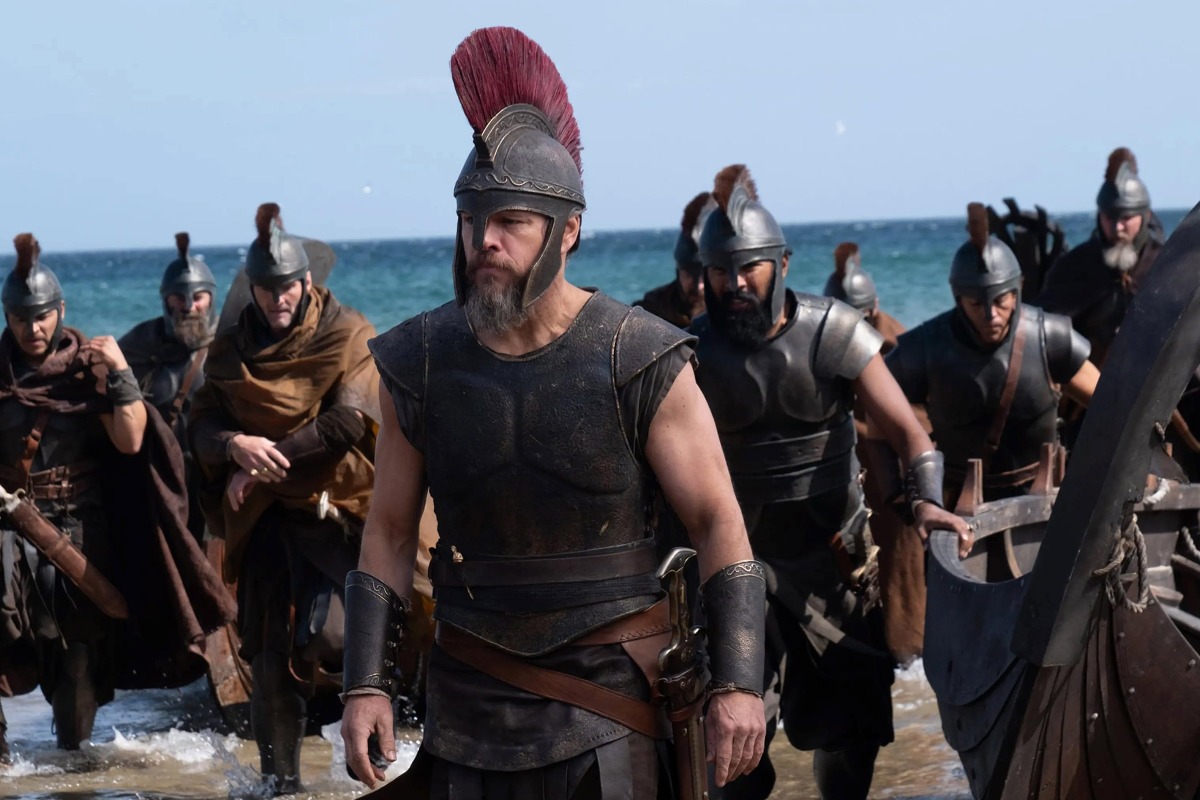
That’s the word that kept flashing through my head as I watched Christopher Nolan’s nearly three hour interpretation of The Odyssey last weekend. It’s well-executed, immersive, and frequently visually stunning. Yet for all its Sturm und Drang it suspends disbelief only in mild, abbreviated spurts. It is, dare I say, rather bland. For an R rated movie the violence is surprisingly tame. There’s no sex, no sensuality, none of the human texture that makes the poem live and breathe. Nolan’s characters speak in modern American colloquial English. While it’s a defensible creative choice that makes for entertaining moments — Matt Damon’s Odysseus refers to the Greek siege of Troy as “Ten years on this f***ing beach!” — Nolan fails to supplant the essential poetry elsewhere. The Odyssey is an epic, one of western civilization’s first. Nolan’s movie is an action flick.
This has always been Nolan’s weakness as a filmmaker. He invests everything in the spectacle, as if making things big enough and loud enough will reflexively trigger audiences’ emotions. The spectacle leaves no room for poesy.
In an essay for the London Review of Books, the classicist Emily Wilson, whose 2017 translation of the poem Nolan cited as inspiration for his version, likened the film to a Fourth of July fireworks display, “with about the same level of narrative and emotional depth.” While I generally agree with Wilson’s assessment, I disagree with that part of it. I have gotten misty at Fourth of July fireworks displays, they being among the handful of things over which men are allowed to cry openly, along with the Grand Canyon and the final scene of Field of Dreams. Nolan’s Odyssey, based on one of the greatest narratives in the western canon, elicited no such reaction. It is full of sound and fury, signifying nothing.
Wilson’s critique is ironic, given that her translation has much in common with Nolan’s interpretation insofar as it strips away the poetry. She chose to render her version in iambic pentameter because, as she explained on her blog, it is the natural Anglophone equivalent to ancient Greek’s dactylic hexameter, since both serve as the conventional, traditional meter for narrative verse in their respective languages. This is the triumph of form over feeling. While iambic pentameter hews most closely to the way English is spoken, it’s still a structure with rules. Attempting to mimic – not interpret, but mimic – different structures in different languages is akin to playing the same song on different instruments. You may get close, but there will be a lot of tones that are simply lost. You’re better off either hewing as close as possible to the original or creating something entirely novel. Here I think of the difference between The Odyssey and O Brother, Where Art Thou? You can have one or the other, you cannot have both.
Some of the most moving poetry in the English language is in iambic pentameter. As a form of original creativity, it’s an artistic challenge. As a form of translation, it’s a limitation. Wilson’s translation stands as an intellectual accomplishment, which itself is no mean thing. Meanwhile, her essay has produced its own storm-inside-a-storm of criticism, including a snarky tweet from Joyce Carol Oates (Oates chided Wilson for biting the hand that fed her, which is akin to telling anyone who’s made money off of Tesla stock that they owe fealty to Elon Musk).
In this context, by “poetry” I mean not form, meter, or rhyme, but the essential, ineffable music and beauty of verse, what William Wordsworth called in his preface to Lyrical Ballads “the spontaneous overflow of powerful feelings … recollected in tranquility.” In “Ode on a Grecian Urn,” John Keats wrote “beauty is truth, truth beauty — that is all / Ye know on earth, and all you need to know.” Deep aesthetic experiences convey profound realities that go beyond form, beyond facts and plot points. Wilson’s translation lacks spontaneous emotion; Nolan’s interpretation lacks tranquility.
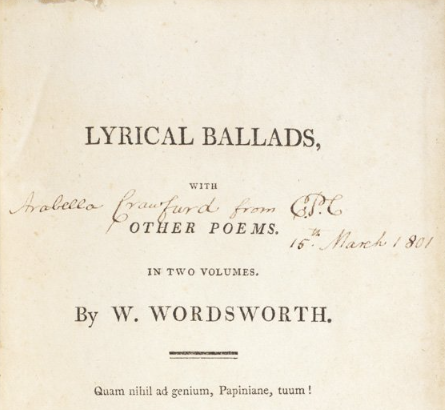
For example, Wilson’s translation of The Odyssey opens with, “Tell me about a complicated man.” In contrast, the modern gold standard translation by Robert Fagles opens with, “Sing to me of the man, Muse, the man of twists and turns.” Singing of a man of twists and turns is a poem; telling about a complicated man is a cliche over happy hour cocktails. “Tell me about this man you’ve been dating.” “Oh, he’s complicated.” Wilson hemmed herself in with an intellectual conceit. Nolan hemmed himself in with visual (and audible) pageantry. Both strip the poem of its lyrical beauty.
Telling a story to which the audience already knows the ending is a challenge in itself. In Titanic, James Cameron solved it by creating a Romeo and Juliet story of forbidden love. Everyone knows the ship is going to sink, so the audience’s emotional investment is in Jack and Rose’s intertwined fates. There’s no such invention in Nolan’s Odyssey. The closest approximation is the inclusion of Odysseus’s hunting dog, Argos, who gets maybe 20 seconds of screen time. Even then, it’s cheap, a dying dog. I’ve already seen All Dogs Go To Heaven.
During the drive home from the movie I remarked to my friend that never once did my pulse so much as skip a beat. The acting is mostly flat. This is another confounding Nolan tic: He casts the biggest names in Hollywood and then underutilizes their range. Watching Oppenheimer, I never forgot that I was watching Matt Damon, Emily Blunt, and Robert Downey Jr. play make-believe. Sometimes Nolan gets lucky and casts an actor who’s director-proof, like Cillian Murphy as the titular character in Oppenheimer or Guy Pearce in Memento. DiCaprio is gonna DiCaprio no matter what the director tells him. Alas, none of the actors in The Odyssey fit that qualification. I never forgot that I was watching Damon, Anne Hathaway, Tom Holland, Zendaya, Charlize Theron, et al. Not that they aren’t capable of great and even transcendent performances, it’s just that they need a strong guiding hand. Nolan is too clinical to be that hand. He even manages the impossible and renders Damon, Theron, and Hathaway sexless. That’s a cinematic feat in itself, albeit not the good sort.
In the poem, Odysseus is compromised by his own ego. Millions of middle and high school students have learned the concept of hubris through the poem. Nolan strips away this fundamental character paradox. He really wants us to like Odysseus, and even to pity him. The “real” Odysseus surely would have issues with the latter. Stripped of his essential hubris, the hero becomes an observer of events rather than their catalyst. Worse still, instead of a cautionary example of the mortal dangers of unchecked ego, Nolan’s Odysseus mostly comes off as incompetent. While much has been written and said already about the director’s deviations from the source material, this is his biggest character misstep. What’s next, a King Lear who’s a victim of circumstance?
Perhaps because it’s Matt Damon, I found myself comparing the action sequences in The Odyssey to Steven Spielberg’s Saving Private Ryan. When I saw that movie in the theater, my heart pounded like to snap a rib. Spielberg’s genius is his ability to combine grand scope with all too human pathos: The mortally wounded teenage soldier screaming for his mama on Omaha Beach, the shell shocked GI wandering in a daze through the hellstorm seemingly unaware that he’s picking up his own severed arm. Those moments, which flash on the screen for a few seconds, punch the audience in the gut harder than all the exploding bodies combined.
Nolan never pauses long enough to allow the audience those points of emotional entry. He’s too busy bludgeoning you over the head. There may be blood, but there is no poetry.
To zoom in closer: In Private Ryan, midway through the carnage on Omaha Beach a shell explodes near Tom Hanks’s Captain Miller, sending him into dazed shock. The deafening sounds of battle fade into vague echoes as Miller holds his helmet in his hands and gazes into the bloody water like a fortune teller seeking a prophecy.
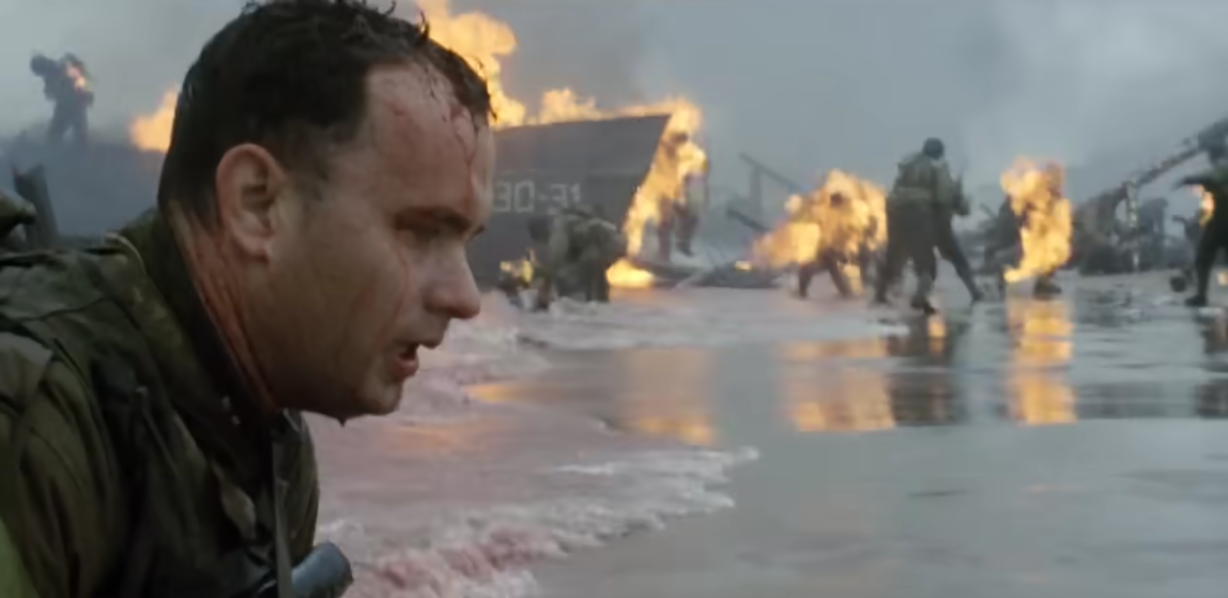
There’s a similar beat in The Odyssey. Midway through the sack of Troy Damon’s Odysseus is nearly killed by a Trojan soldier, saved by a comrade at the last moment before the sword finds his throat. Like Miller, Odysseus falls into a sort of reverie and the violence fades into a vague distance. He watches the carnage around him as though he has no part in it, least of all as its master strategist.
That scene replays two or three times before the final act, in which Nolan has Odysseus describe what he was thinking in the moment. Unlike Spielberg, who allows the audience to conjure Miller’s thoughts for themselves, thereby inhabiting the character, Nolan insists that Odysseus explain himself in detail. Again, it’s clinical. I wanted to shout at the screen, “Stop telling us what to think!” Odysseus’s soliloquy that ends the film is Nolan’s unconscious confession that he doesn’t trust the reverie. He doesn’t trust his audience. It’s a director confusing dialogue for interiority.
Captain Miller is deeply conflicted about his role in war. Like Odysseus, he witnesses troops on his side commit atrocities. Like Odysseus, he sacrifices his own men in furtherance of a quest that he himself ultimately questions. Unlike Odysseus, Miller’s conflict is never resolved. His final line, spoken to Private Ryan, is “Earn this.” With his dying breath he bestows upon Ryan a burden that, deep down, he must know the young man can never possibly carry. It’s unfair, even cruel. They were all just following orders. Like all great war movies, Saving Private Ryan ends on a note of moral ambiguity. I’ve re-watched it over the years, and I’m still not sure if I like Captain Miller. Nolan forces his hero, and therefore the audience, to settle all questions, once and for all, on his own terms.
The Odyssey offers an often sumptuous visual feast. That’s the movie’s core strength, and the reason I’d recommend people see it. Some of the shots are breathtaking. It’s amazing what Nolan can do with fog. The movie includes what in my estimation is one of the most gorgeous scenes ever caught on film. Tellingly, it’s simple: A broad shot of Odysseus walking along Calypso’s beach all alone. Nolan frames it like a J.M.W. Turner watercolor landscape. The beach occupies four-fifths of the shot, with the menacing sea reduced to a smudge of dark blue-green beneath a washed out sky. Odysseus is rendered inconsequential, dwarfed by the world around him. If a still were captured and hung in the Getty Center’s Romantic collection, people would gaze at it for long minutes at a time. In another scene, Telemachus trains in sword fighting atop a massive seaside cliff, with the family’s home looming on the mountain beyond. Watching the movie, I was ravenous for more of those moments, and less of the screaming and shouting.
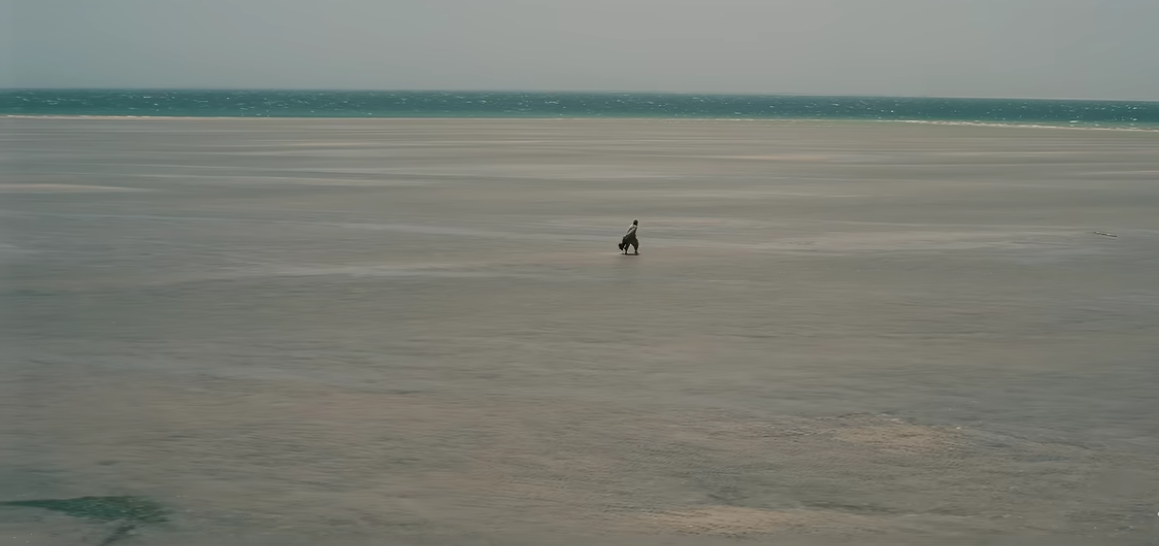
More, please.
As for the screaming and shouting, the absence of tranquility, the set pieces are startlingly redundant: Odysseus and his men land on an unfamiliar shore, encounter monsters or ghosts, then run in a panic back to their ships (eventually ship, singular) and escape. The cyclops Polyphemus, the Laestrygonians, the spirits of Hades, all are handled the same. By the third or fourth repetition I heard Graham Chapman’s King Arthur and the other Knights of the Round Table in Monty Python and The Holy Grail shouting “Run away!” I am not alone in making this comparison. As they flee the Laestrygonians (who are rendered as giant armored knights who chase Odysseus and his men off the beach, not rock-hurling Gargantuas who destroy half his fleet, another perplexing choice) Odysseus literally shouts “Run!” I actually giggled. Suffice it to say, that’s probably not the reaction Nolan was going for.
For my money, Polyphemus is the most sympathetic character in the movie. One minute he’s tending to his herd of sheep, the next someone’s poking out his eye with a flaming tree trunk. His wails convey not so much pain or rage but shock and betrayal, as strangers who violated his home hideously punish him for the sin of being himself. I felt bad for the guy, even after he snacked on a couple of Odysseus’s men. The movie’s only moment of pathos involves a 60 foot animatronic monster with no lines.
At the same time, Nolan leaves out the key to the entire narrative. In the poem, Odysseus demonstrates his cunning by telling Polyphemus – while they’re getting drunk together – that his name is “Nobody.” There are also other cyclops on the island. They come running when Polyphemus screams in agony after being blinded and ask him who is hurting him. In arguably the poem’s most famous moment, Polyphemus replies “Nobody is hurting me!” and the others conclude he’s having a nightmare and leave. At the last moment, as Odysseus and his men are sailing away, Odysseus calls to Polyphemus, “Cyclops—if any man on the face of the earth should ask you who blinded you, shamed—say Odysseus, raider of cities, he gouged out your eye, Laertes’ son who makes his home in Ithaca.” He cannot help himself, even as his crew beg him to shut up. Polyphemus, now knowing the culprit, prays to his father Poseidon – whoops – to avenge him, and Poseidon does by blowing the returning Greeks hopelessly off course and starting the ten year … well, you know.
I cannot for the life of me understand why Nolan left out this narrative lynchpin. It would have added maybe a minute to the run time. The cyclops scene is Odysseus’s character on full display: His tactical brilliance saves his men, only for his egomania to doom them a few minutes later. Nolan’s elimination is storytelling malpractice. It would be like remaking Gone With The Wind and leaving out all the Civil War stuff. At this point, I wasn’t even sure the movie could be called The Odyssey.
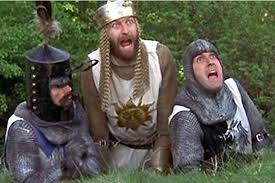
Run away!
Another voice banging around my head during the movie was Virginia Woolf. In her essay “Mr. Bennett and Mrs. Brown,” Woolf criticized the tendency of pre-modernist Edwardian English writers to catalog visual externalities at the cost of character. So busy were writers like Arnold Bennett creating physical worlds, she argued, that they neglected to include the human beings who lived in them. She asked, “Why is it so hard for novelists at present to create characters which seem real?”
She continued, “[Mr. Bennett] is trying to make us imagine for him; he is trying to hypnotise us into the belief that, because he has made a house, there must be a person living there. With all his powers of observation, which are marvellous, with all his sympathy and humanity, which are great, Mr. Bennett has never once looked at Mrs. Brown in her corner.”
So it is with Nolan. For all his marvelous powers of observation, whether in the mind-bending physical world of Inception, the time-bending worlds of Memento and Tenet, or the genre-bending world of The Dark Knight trilogy, he is forever creating elaborate rococo houses in the hope that audiences may divine the sorts of people who live in them, and how they feel in any given room at any given moment. If they don’t, his characters are there to exposit.
Nolan, like his adopted hero, cannot help himself: Even when his characters aren’t speaking he still finds a way for them to tell the audience how to think and feel. The film ends with Odysseus’s soliloquy. It’s essentially a lecture to the audience about everything they just saw. He laments that the greatest victory of his life, and the ruse for which his people lionized him, the Trojan Horse, was not the culmination of a great civilization’s greatest triumph but a betrayal of that civilization’s foundations. As he speaks, Zendaya’s Athena appears, reduced to delivering Meaningful Looks lest the rubes out there in the dark miss the point.
Odysseus’s confession should be, at last, an opportunity for the audience to feel, to empathize, to live the consequences of the hero’s hubris. The great man admits that his greatest exploit was in fact his greatest failing. His men’s sacrifices and deaths, the rivers of blood he spilled, the gods he angered, the child he left to grow up without a father, the wife he abandoned for two decades, the city on the brink of civil war in his absence — all of it augurs nothing less than the beginning of the end of the very civilization for which he was fighting. That’s something! But Nolan has Odysseus explicate the bejeezus out of it until every drop of soul is wrung out and his own culpability is explained away, while Athena sits next to him looking Forlorn and Regretful.
Nolan reduces Odysseus’s dispatch of the suitors, the story’s penultimate emotional climax, to a pedestrian action movie set piece. Again the violence is subdued, with little blood or viscera but plenty of smash cuts as Jason Bourne Odysseus single-handedly wipes out the 108 baddies (in the movie it looks like about half as many). It feels less like a climactic triumph and more like action movie box checking. Then he and Penelope literally sail off into the sunset as Telemachus takes the crown. The End.
Several of Nolan’s other narrative choices are baffling. For example, Athena is a central character in The Odyssey. Disguised as the old man Mentor, she guides Odysseus’s son Telemachus on his parallel journey to visit King Nestor as he seeks to learn of his father’s fate. In Nolan’s telling, Athena is an almost silent presence who appears as herself to Odysseus. Or perhaps he imagines her. Or perhaps she’s the real or imagined incarnation of a woman his men killed at Troy. It’s all rather unclear. In the poem, Circe is a beautiful sorceress with whom Odysseus has a year-long affair to which subsequent poets added at least four offspring (Greek mythology isn’t big on natal calendars). In the movie, she’s a homely hermit witch who acts out of boredom and spite, and with whom Odysseus and his men spend at most a few hours. What was the point of including her at all? Homer’s version is a moral test and quandary that Odysseus fails. Nolan’s is an errand and distraction that leaves no lasting mark. In the movie, Circe offers no stakes, just a scene in which she transforms Odysseus’s men into swine with visually disconcerting verisimilitude (seriously, the scene is hard to watch). The Sirens are nearly invisible naked girls on some rocks. Scylla and Charybdis are never mentioned by name and are navigated past with relative ease. Scylla is portrayed not as a six-headed monster but as an oversized Mummenschanz-like Muppet.
One other change is worth noting, because it’s been the subject of much garment-rending from certain quarters. Nolan cast a lot of non-white actors in key roles, which caused certain heads to explode in outrage. To which the only reasonable reaction is: Stop it. Great works are made to be interpreted in subsequent eras. In 2021 Joel Coen cast Denzel Washington, who last I checked is neither Scottish nor white, as Macbeth, and, if you’ll forgive the pun, he killed. Nolan isn’t the first director to cast non-white actors in an adaptation of Homer’s poem. A 1997 TV miniseries version of the tale co-produced by Francis Ford Coppola featured Vanessa Williams as Calypso. In Nolan’s case, diversity is one of the film’s strengths. It universalizes a story that deserves it. Again, the issue is what Nolan does with those actors. In addition to criminally underusing Zendaya (and, for that matter, Athena herself) Nolan gives short shrift to Lupita Nyong’o, who gets a couple of forgettable lines as Helen and a jump scare as the murderously vengeful Clytemnestra. Travis Scott was an inspired choice for The Bard, but Nolan reduces him to table-pounding exposition. Himesh Patel almost works as Odysseus’s second-in-command and conscience Eurylochus, but Nolan directs the anguish out of him.
For its vast spectacle, there’s a sort of claustrophobia to the film, a feeling that every scene is crushed beneath the weight of the ones that come next in the script in quick succession. When all was said and done, it felt like Nolan had run one of the greatest epics in history through a Save the Cat! beat sheet, then cut for time.
Clinical.

 the all aspect report