There’s an old saw among political scientists that the more synonyms for democracy in a country’s name, the more repressive the country is likely to be. The least democratic country on earth is the Democratic People’s Republic of North Korea. The People’s Republic of China has one fewer modifier and is marginally less repressive.
The same rule applies to the glossaries that self-interested politicians and profiteering nonprofit executives have created around the homelessness epidemic. We’re told that the people who create garbage and excrement strewn encampments and screaming and playing music at 3 a.m. are our “unhoused neighbor.” The ex-con who just got out of Pelican Bay for a rape conviction who now lives in an illegally parked van down the street from a middle school is is a “justice-involved person.” The heroin addict robbing small businesses to support his habit is an “individual with substance use experience.” And so on.
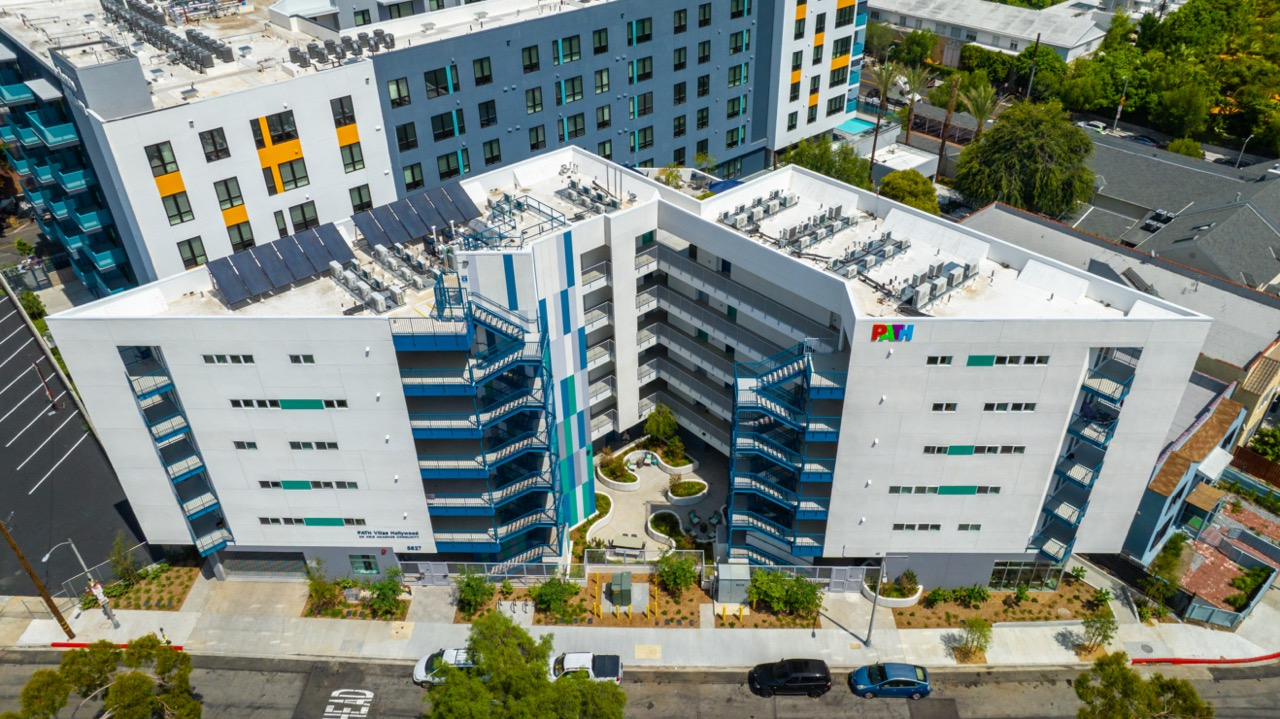
Then there are the names some of the nonprofits give themselves: People Assisting the Homeless (PATH, get it?), Step Up, The People Concern, Safe Place for Youth, various Missions, and Purloiners of Taxpayer Dollars. OK, I made that last one up. But you get the idea. Not to be outdone, the city and county of L.A. operate Inside Safe, Pathway Home, A Bridge Home and other programs.
Just like the lexicons communist dictators use to shade the reality of life for the millions under their palms, here in California the political class deploy benign-sounding euphemisms to obscure the realities of the hellscapes they’ve created for hundreds of thousands of people who lack roofs over their heads, and the millions of regular people impacted by the crisis.
I use the term “regular people” intentionally, and not disparagingly. I’ve interacted with hundreds of homeless people over the years, and I can count on two hands the ones who were perfectly normal and well-adjusted except for the lack of said roof. Though the political and nonprofit classes go to extraordinary lengths to deny it, a substantial majority are addicts, suffer from mental illness, or both. For many, their addictions have driven them insane — you can only do fentanyl on a daily basis for so long before your brain is permanently fried.
Others chose to be homeless. Again, no normal person makes that kind of life decision. I’ve written previously about the contingent who took up residence at Westminster Park in Venice a few years ago. Most were ex-cons, including one who served 17 years in a Colorado supermax prison for second degree murder — an experience about which he spoke openly and with an unsettling sort of pride. Out of the dozen-odd park “residents,” a grand total of two were from California, and none were from Venice or L.A. To a one, they said they were homeless by choice. One woman called it “our little hippie commune.” One of the men, an ex-con from Tennessee said he’d accept housing if the government gave him an actual house. Not an apartment, a house. In the meantime, he liked living near the beach.
All of which makes a mockery of the concept of yet another euphemism, “permanent supportive housing.” Just as the Democratic People’s Republic is none of those things, such places are neither permanent nor supportive, and often barely qualify as housing.
Experience exposes the lies
At this point, the stories are legion about shady nonprofits and profiteering executives who use homeless people as ATM machines while allowing rampant criminal behavior, up to and including rape and murder, in their facilities. The truth can no longer be hidden behind veils of creative linguistics.
Last month, I spoke with a man named Hector as he was leaving a PHF facility on Temple Street in Historic Filipinotown. It was early on a Saturday morning, and he said he was on his way to work as a part-time auto mechanic.
Hector was the exception to the rule. He was sober, clean shaven, wearing clean clothes and hauling his bag of tools. I asked him how he liked living in the building.
“It’s terrible, man. If I’d known, I never would have moved in. It’s a loony bin.” He said management allow residents to drink and do drugs, and that there had been several fires. The police are called “all the time. Sometimes two, three times a day.” He also said that the woman who lives in the unit above him is a prostitute. “I hear it at all hours.”
When I asked him about his job, he said the competition is fierce. He joked, “There’s a lot of Mexicans who know how to work on cars in L.A.”
He also told me he’d put in a request to be moved to a different building, and that if it doesn’t get approved he plans to move back out to the streets. I asked him if it was really that bad. “You have no idea, bro.”
There wasn’t time to delve into his background. I learned that Hector was originally from San Bernardino, moved to L.A. “five or six years ago” after getting divorced and had been in and out of homelessness since. When I asked him what happened, he was vague. “You know, life.”
There was clearly more to Hector’s path to homelessness than “life.” The point is, if the city and county of Los Angeles, which together have spent an average of $1 billion per year on homelessness for at least the last decade, cannot keep someone like Hector “permanently” and “supportively” housed, what chances do people with serious mental illness and/or addiction stand?
The answer is, virtually zero.
Contemporaneous reporting and data echo Hector’s story about the police being called to his building on a regular basis. A March 2026 report by the National Policing Institute found that “High volumes of homelessness-related calls strain law enforcement agencies like the Los Angeles Police Department, as severe mental illness, substance addiction, and rising unsheltered populations drive up repeat emergency requests, impacting response capacities across urban areas.”
This reality plays out countless times every day in the city and county of L.A. A story published just yesterday by the Westside Current reported that calls for service to the Santa Monica Police Department from a single neighborhood increased 450% after a PSH facility opened in October 2024. This kind of number plays out again and again. It represents a failure of epic proportions.
Marla (not her real name) and her daughter were given an apartment in a brand new apartment building in the valley the city housing authority purchased before it was completed (I’m leaving her personal details intentionally vague so as not to risk identifying her). The building was supposed to be for families only. Her story echoed Hector’s. She said several single young men had moved into the the building and that she worries when her daughter is home alone.
Unlike Hector’s building, drugs and alcohol are not allowed in hers. But, she said, “It doesn’t matter. They just go outside, go to the liquor store, whatever, and come back high or drunk and blast their music.” While there are technically rules for visitors, she said the men have friends over “all the time,” and that they are “very loud.” She said it often disrupts her daughter’s study time.
Marla has not complained to management or to LAHSA. She worries about consequences. In a particularly bitter irony, she said she might have to move out after her daughter graduates high school next year because the property does not allow adult children.
I asked her, “What about all the single guys?”
She shrugged.
Marla’s experience raises the same questions as Hector’s. She also said that mold and even mushrooms grew in common areas during the first winter rains. Several people had to be moved out after their units flooded and became uninhabitable. Again, the building is brand new.
The “permanent supportive housing” approach to homelessness isn’t failing — it has failed. Spectacularly. Tragically. Unconscionably.
Forget the euphemisms and feel-good talk. Tell the ACLU to go to hell. Tell the Carol Sobels of the world to take a long walk off a short pier.
We’ve tried everything else. We’ve spent unknown tens and quite possibly hundreds of billions. Out of curiosity, a while back I asked claude.ai to estimate the total amount California has spent on homelessness over the last 15 years, including direct spending as well as fire, police and sanitation resources, property damage, lost business — everything. Claude’s estimate (I hope you’re sitting down) was between $170 and $240 billion.
The only remaining solution is sitting right in front of us: Rebuild the state mental hospital network, and restore families’ and city agencies’ power to request involuntary confinement. One Flew Over the Cuckoo’s Nest might have been a great book and movie, but it’s completely irrelevant in the modern era.
People who are insane and/or addicted to narcotics the likes of which didn’t exist on this planet until the last 20 years need help. They don’t need an apartment. They don’t need a nonprofit that views them as walking dollar signs. They sure as hell don’t need preening politicians who use them as a backdrop.
Some of them, like the denizens of Westminster Park, need a swift kick in the ass, a bus ticket home and a message to stay there — or else.
Someday, hopefully soon, we’ll look back on the era of “housing first” the way we look at lobotomies. Cruel, based on malignantly poor science, and utterly counter-productive.
Actually, I take that back: Lobotomies were kinder.
 the all aspect report