
You poor, delusional sods. Stock image.
Every now and then, liberals in this country engage in an act of modern self-flagellation by concocting or delving into “happiness” or “social progress” studies. These studies, which are about as scientifically rigorous as alchemy, purport to measure various aspects of quality of life around the world. Almost invariably, they conclude that the United States is among the less happy and progressive places in the world.
As a threshold matter, happiness is impossible to quantify. Social progress is nearly as difficult. There are miserable rich people and joyful poor people. I’ve met homeless people who were genuinely contented with their lives, and centimillionaires who struck me as on the brink of suicide. One of the happiest single individuals I’ve ever encountered was a Chinese artist in a village called Pingyao, about 400 miles southwest of Beijing. He lived with half a dozen other people in a shared flat that lacked so much as a sink. His toilet was a hole in the ground a block away. He was rail thin, and ate two meals a day consisting of rice and a few pieces of chicken or pork. He spent his days reading ancient poetry and painting beautiful images of birds, mountains and scenes from Chinese mythology on rice and silk paper. He sold his creations for a few yuan to locals and tourists. In the afternoons he took long walks around the town and into the countryside.
By any metric of modern life, he would rank at or near the bottom. He had no access to running water or indoor plumbing, no private space and unreliable electricity. He certainly didn’t have internet access. His personal space consisted of a bamboo sleeping mat on a wooden floor. Yet he was happier by a sight than some of my old law partners who made $10 million a year, lived in Bay Area mansions and drove $100,000 luxury cars.
Similarly, “progress” means different things to different people. By many measures the U.S. is among the most progressive countries in the world. The challenge is, we’re also among the most cacophonous. There are a lot of people with a lot of opinions on the subject. Again, this makes objective measurement difficult if not impossible.
The point is, measuring happiness and progress generally is a fools’ errand, much less at the level of a society or a nation. Yet people invest faith in studies that purport to do just that. The latest example comes courtesy of New York Times columnist Nicolas Kristoff. I preface the rest of what I’m about to say by noting that I have a huge amount of respect for Kristoff. Over the years he’s reported deeply on issues that much of the media gloss over if they cover at all. In particular, his investigations into international sex trafficking and pornography have been deeply impactful. He’s covered atrocities in places like Congo and Sudan that are otherwise criminally underreported.
Then again, no one’s perfect. Yesterday Kristoff penned a column entitled, “Life, Liberty and the Pursuit of Unhappiness.” With apologies to Pepe LePew, when I read the headline my immediate reaction was, “le sigh.”
Methodologically hopeless
The column centered on a recent study by an outfit called the Social Progress Imperative (why not). The “2026 Social Progress Index” purports to measure, well, social progress in 171 countries along 57 metrics over 30 years. This is absurd on its face.
Stop for a moment and ponder the fundamental methodological impossibility of this task. Meaningful research, much less that of the comparative sort, relies on a singular input: Consistent data. To make a truly 1:1 comparison you need data that are collected in identical ways. In addition, such comparisons require consistent baselines.
When it comes to comparing countries, such data and baselines are impossible. To take just one example, the Index compares countries in the context of providing people with “adequate shelter.” “Adequate shelter” is different in different places. It means something very different in the United States compared to, say, Tanzania. For that matter, adequate shelter means something different in the Tanzanian capital of Arusha compared to the wide open western savanna.

A-ha! Social progress! Stock photo.
The Index’s summary acknowledges as much, yet purports to still be objective. For example, the authors note, “As the coverage of the Index is global, all indicators need to be relevant to all (or nearly all) units of observation, i.e. countries. For this reason, some specific issues such as malaria deaths cannot be included as they do not affect all countries.”
Hold the phone. Malaria deaths are a huge component of quality of life in many countries. According to the World Health Organization, in 2024 there were 282 million cases of malaria worldwide and 610,000 deaths. Malaria has enormous implications for the societies it affects, impacting everything from childhood cognitive and physical development to overall social cohesion and economic development. Yet the authors casually stroll past it without so much as a sideways glance.
There’s another deep flaw in the Index. You would think such an undertaking would involve dozens if not scores of scholars with deep expertise in the topics and countries addressed. You would be wrong. The Index appears to be primarily the handiwork of four or five people. Kristoff notes that the Index “was introduced in the 2010s by a high-powered group of scholars and experts.” I’m not so sure. Maybe this is unfair, but it’s hard to take seriously an organization whose director boasts in his biography that in 2016 “he was named one of ‘The 100 Most Connected Men in Britain’ by GQ Magazine.” Well, then. I’ve read enough academic papers in my career to smell b.s. I caught a noseful while reviewing some of the work of the “scholars and experts” at the Imperative.


Adequate shelter, or adequate shelter? Stock photos.
A liberal dopamine hit
Kristoff takes the Index’s conclusions at face value, noting that “the United States ranks 32nd out of 171 countries, behind Poland, Lithuania and Cyprus. The most absurd part of the ’s op-ed is a quote from one of the Most Connected Men in Britain, who said, ““The U.S. won the Cold War by being an economic superpower and a social progress superpower. Over the last 30 years, America has simply let go, in terms of social progress.”
This is a ridiculous statement, bordering on flat-out stupid. Over the last three decades the United States has seen the legalization of same sex marriage, an overwhelming acceptance of same sex relationships, demographic diversification on a historically unprecedented scale,and the election and reelection of the first black president. Representation of historically marginalized cohorts in the arts, academia, media and business likewise are at historic levels. Today women earn more college and graduate degrees than men. Even conservative states like Texas are transitioning to non fossil fuel energy sources. Despite spikes in several major cities over the last eight years, violent crime remains at or near historic lows. Yet the organization’s director suggests that the United States somehow was more socially progressive in 1995 than we are today. Someone with this opinion is not to be taken seriously.
None of this is to suggest we aren’t without our challenges. Social progress is by its very nature uneven. We continue to struggle with racism, for example. Then again, want to know which other countries struggle with racism? All of them.
Other conclusions are equally laughable. “In safety, the United States ranks 99th, the index finds, behind Pakistan….” Last I checked, women in the United States aren’t stoned to death for the crime of being raped, and homosexuality isn’t a crime punishable by lengthy prison sentences. Where would you feel safer walking down the street at night, New York or Karachi? Here’s the Canadian government’s travel advisory for Pakistan: “Exercise a high degree of caution in Pakistan due to the unpredictable security situation. There is also a threat of terrorism, regional violence, civil unrest, sectarian violence and kidnapping.” Well, then.
Again, the U.S. certainly has its issues. But generally speaking this country is so safe that when a single woman is shot and killed by authorities it makes national headlines for weeks. And rightly so.
Liberals argue that the United States has become considerably less safe for illegal immigrants under Donald Trump, particularly in his second term. That’s true as far as it goes, but it obscures a more important reality. Under former President Barack Obama, the United States deported some 3.2 million undocumented immigrants, infamously earning him the moniker “deporter in chief.” So far in Trump’s two terms, about 600,000 people have been deported. In other words, to match Obama’s record, in the last three years of his second term Trump would have to deport nearly 900,000 per year.
The biggest criticism of Trump’s current deportation policy is its ruthlessness. That is an absolutely valid criticism, and on its face suggests that the U.S. has become less safe for that cohort of people. Then again, one has to wonder: Were all 3.2 million of Obama’s deportations peaceful? Under Obama, did ICE politely knock on doors and ask people nicely to come along, with sincerest apologies to the affected families? Maybe. Or maybe the media and protesters were less inclined to look too closely at the handiwork of St. Barack. Just maybe.
Kristoff has a point
Kristoff notes, “the index also captures something real. It explains some of the frustration and discontent that helped elect Donald Trump on the right and Zohran Mamdani on the left. When Americans say that the system is not working for them, these rankings illuminate why they feel such frustration.”

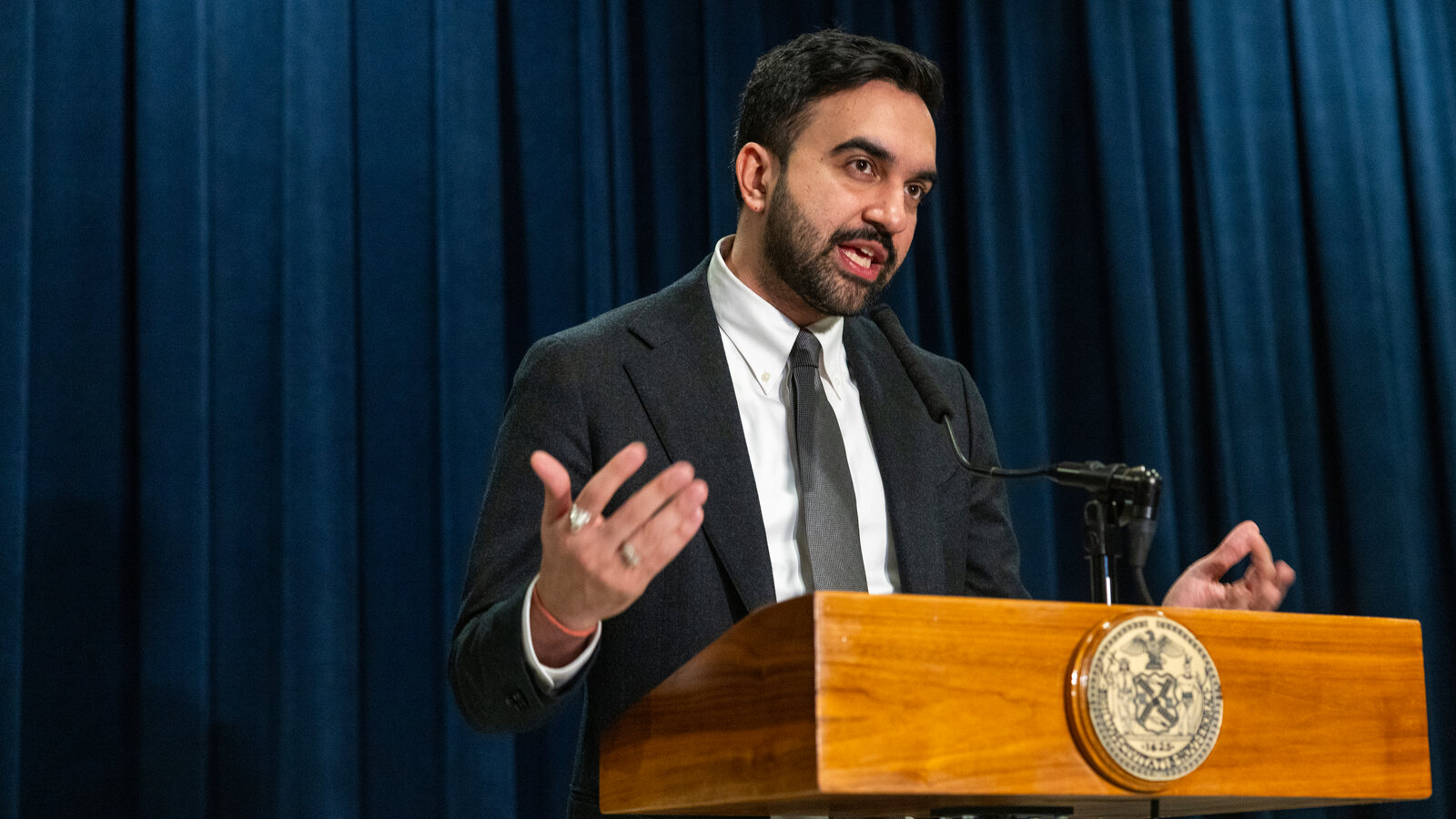
Tomato, tom-ahto? Stock photos.
Here I think he has a point, though not the one he thinks he has. Trump and Mamdani (and, for that matter, the Tea Party and The Squad) do reflect a widespread feeling that the system is failing large swathes of Americans. This feeling does not reflect a general backsliding in our society writ large, but a very specific recognition that our country’s political class increasingly is in thrall to an unholy confederation of right wing capital and left wing ideology.
I live in California, where that confederation has been in power since the turn of the century. It manifests in the YIMBY movement, which promises that the state’s housing affordability crisis can be solved by unleashing investor backed for profit developers.at an unprecedented scale. It’s trickled down economics (the YIMBYs call it “filtering”) viewed through a progressive political lens. And it’s an unmitigated disaster.
This confederation is visible in the Homeless Industrial Complex, the collapsing public education system, even individual projects like the state’s catastrophic efforts at high speed rail. HSR is a perfect example: A Green New Deal project that has proven immensely profitable to well-connected consultants without laying a single foot of track.
Kristoff concludes, “We are not the nation we think we are, and we should shake off this complacency.” He’s right, but again, not for the reasons he thinks.
Note: Unfortunately, I couldn’t download the Index’s raw data, because the Social Progress Imperative charges $200 for it as an “Individual Changemaker.” Then again, at least I wasn’t trying to access it as a business, which would run me $1,000. Anyone else see a problem?
Like what you’re reading? Consider supporting independent journalism at the all aspect report!
Make a monthly donation
Make a yearly donation
Choose an amount
Or enter a custom amount
Contributions securely processed by Stripe. Thank you for your support.
Your contribution is appreciated.
Your contribution is appreciated.
DonateDonate monthlyDonate yearly the all aspect report