The Times editorial board accuses firefighters of “sabotaging” public safety by opposing HLA — Are they irredeemably dishonest or just hopelessly blinkered?
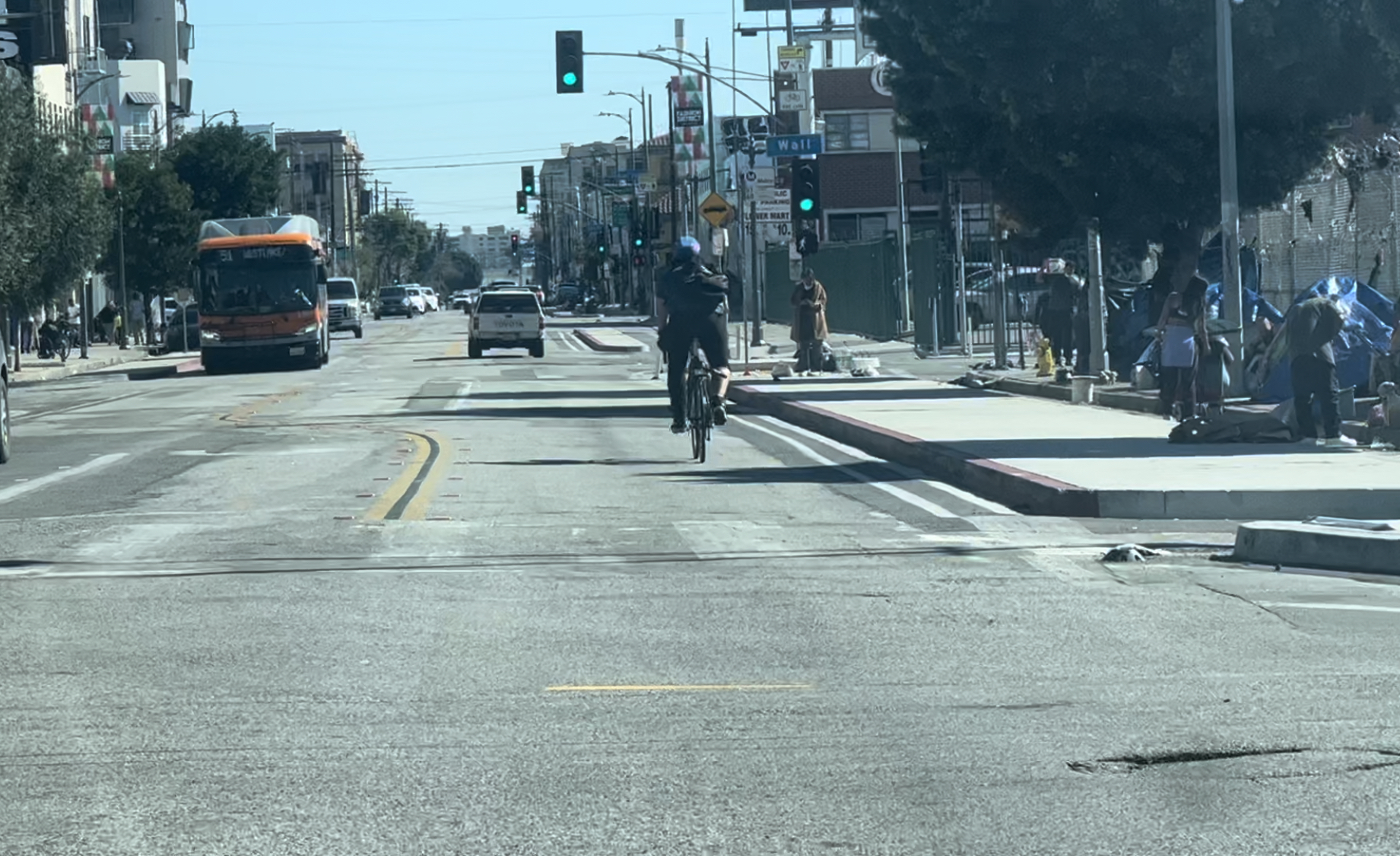
Another day, another mendacious, fact-free editorial from what’s left of the Los Angeles Times, which allegedly used to be a newspaper. Today’s doozy involves Measure HLA, a voter initiative on the March 5 City ballot. Should it pass, the City’s Streets Services department, also known as StreetsLA, would be required to add bike lanes, bus lanes, and/or traffic calming obstacles whenever it resurfaces more than 660 feet of road. That’s roughly an average city block. If you want to kill a few brain cells, you can read the editorial here.
Anyone with common sense doesn’t need to dig deeply into the measure’s text to recognize what a bad idea this is. Urban street and road networks are enormously complex, interdependent systems. They evolve over years and decades as surrounding neighborhoods change. Dictatorial mandates are anathema, because even the smallest modification to a street – say, adding a speedbump – can have significant impacts on everything from overall traffic volume to emergency response. Mandating downright radical changes, and doing so block-by-block over thousands of blocks over a decade, is a recipe for transportation anarchy – and death.
Make no mistake: if Measure HLA passes, and if the City finds a way to fund and implement it, many more people will die on L.A.’s streets. We know this from the last decade of hard experience with so-called “Complete Streets” and “Vision Zero.”
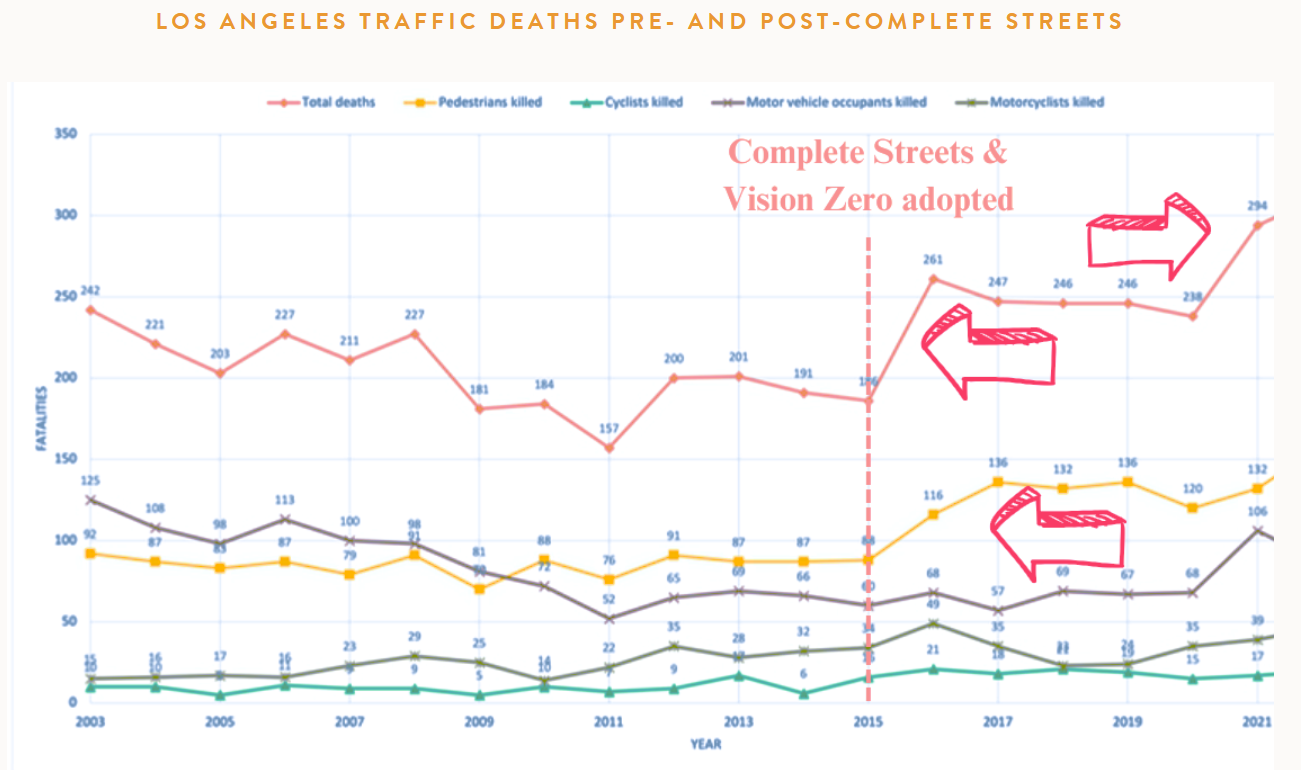
All of which is why the United Firefighters of Los Angeles City (UFLAC), as well as the International Association of Firefighters (IAF) and the California Professional Firefighters (CPF) have come out in force against Measure HLA. Collectively these organizations represent some 400,000 firefighters and paramedics in Los Angeles, California, the United States, and Canada. You can watch their first commercial here (it has racked up more than 350,000 views in barely 24 hours).
In their editorial zeal, which borders on a sort of political-social fundamentalism, the Times editors never bother to ask why the firefighters oppose Measure HLA. Do they think there’s some greedy self-interest at work? Do they think the firefighters and their unions have nothing better to do? Are they just seeking attention for attention’s sake? The editors finger wag, “instead of working to help solve this crisis, some of the city’s most powerful interests are trying to sabotage efforts to make the streets safer for pedestrians, bicyclists and, yes, even drivers.” It’s a safe bet none of them have so much as a First Aid certificate.
If they did, they might have considered that maybe, just maybe, first responders have seen and lived the effects of road diets, bus lanes, traffic calming, and all the rest on public safety every day for the last decade. The editors might have considered that maybe, just maybe, some of those first responders have been unable to reach victims in time because of catastrophically misguided, dangerous “Complete Streets” projects like the road diet in front of LAFD Station 9, the busiest firehouse in the country.
For that matter, consider the sheer gall of activists and newspaper editors claiming superior insights into public safety compared to actual first responders. They use the word “sabotage.” As if the firefighters are sitting in some cigar smoke choked cloakroom, rubbing their hands together like Mr. Burns as they scheme ways to get more Angelenos killed on our streets. It’s actually delusional.
L.A. voters need to ask themselves who they trust: 400,000 men and women who spend their careers risking their own safety to help complete strangers, or activists and activist newspaper editors. It really is as simple as that. If the activists and newspaper editors were ever to be trapped in a burning building, those selfsame first responders would charge inside to save them, too.
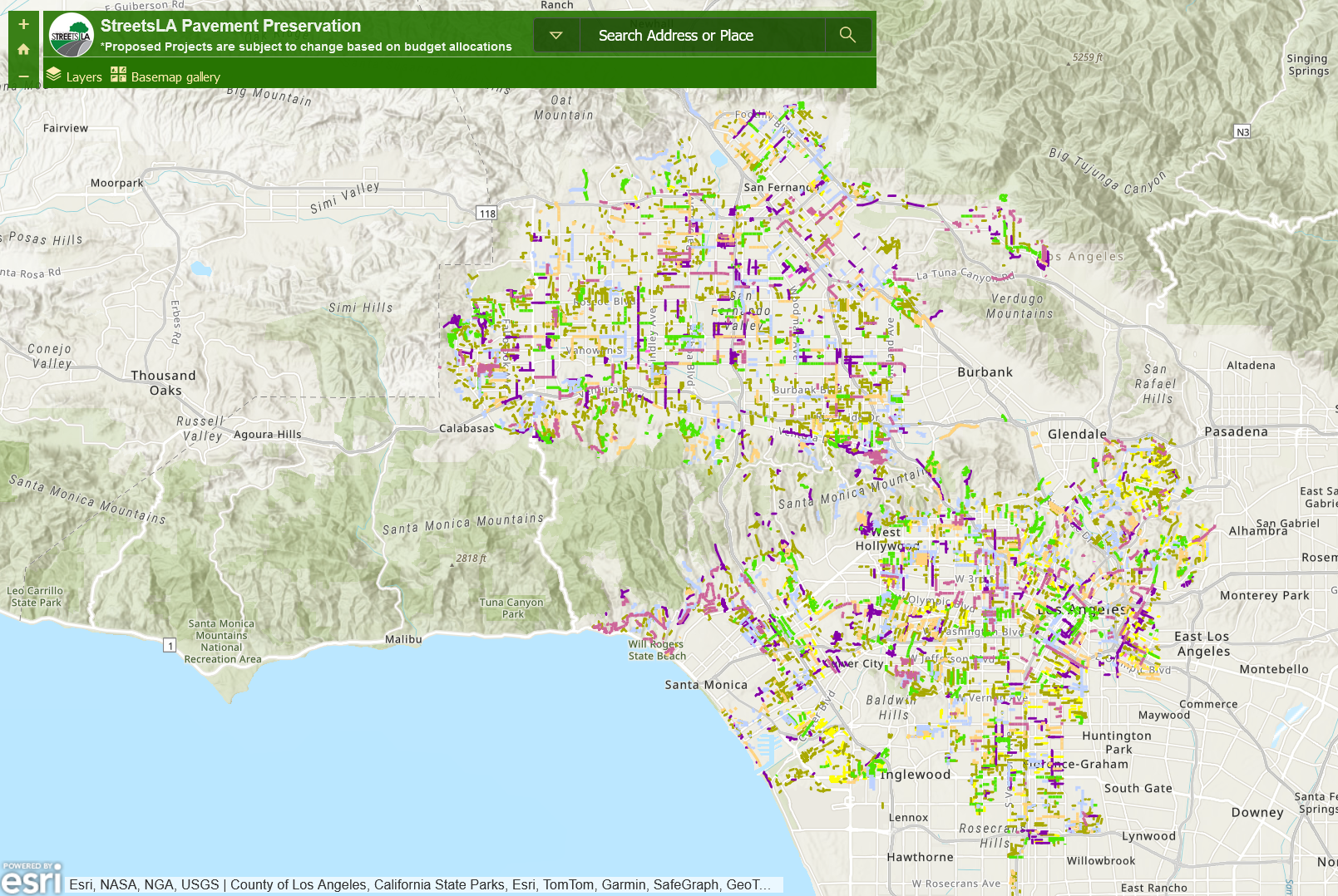
The image below is from Streets Services’ interactive GIS map showing all planned resurfacing and remediation projects between 2024 and 2028. Imagine adding obstacles and anti-car features to every single one. Again, anarchy. There is neither rhyme nor reason to Measure HLA; it simply says “do this or else.”
Further revealing their bias, the Times editors conveniently omit the “or else” part. Measure HLA would allow anyone to sue the City in the event Street Services fails to install the mandated obstacles on any given block. As Councilwoman Traci Park has pointed out repeatedly, this provision would unleash a small army of ambulance chasing lawyers eager to make a quick, easy buck at the taxpayers’ expense. That’s because prevailing parties would be entitled to recover attorneys fees. An unscrupulous, Better Call Saul style lawyer could make a comfortable living on little else.
When the editors aren’t lying by omission, they’re just lying. They claim, “the Mobility Plan requires that the fire department review individual proposed changes to traffic lanes.” Apparently the Times editors haven’t bothered to read the Plan. The term “LAFD” appears precisely seven times in the 202-page document. Nowhere does the plan refer to, much less require, fire department review of individual projects. Here’s a link to the plan, do a Control+F search yourself (notably, and again tellingly, the Times editors do not link to the plan in their piece). The entire reason the firefighters union got involved is due to impacts on emergency response.
In the very next sentence, the editors did link to the City’s Environmental Impact Report regarding the Mobility Plan, because unlike the Plan itself that document helps their case. At least, it does if you don’t think too hard. The EIR’s evidence-free, conclusory assertions are worth quoting at length:
Where segment-level [level of service] would be significantly impacted, emergency vehicles would not be significantly impacted because California state law requires that drivers yield the right-of-way to emergency vehicles and remain stopped until the emergency vehicles have passed. Generally, multi-lane roadways allow the emergency vehicles to travel at higher speeds and permit other traffic to maneuver out of the path of the emergency vehicle. In addition, emergency service vehicles would be able to utilize the bus-only lanes when responding to an emergency which could help to improve travel times…. Therefore, no impact related to emergency access would occur.
I could spend an entire post unpacking everything wrong with these evidence-free conclusions. Suffice it to say, removing traffic lanes makes it impossible for drivers to yield the right-of-way (also, the EIR is imprecise; California law doesn’t require drivers merely to yield, it requires them to pull right, out of emergency vehicles’ path). Likewise, activists love to argue that emergency vehicles can use bus-only lanes, but they never answer the question of where the buses are supposed to go to get out of the way.
Hilariously, the Times editors cite StreetsblogLA as an authority for their criticism of the City Analyst’s Office financial estimates. Streetsblog, of course, is funded by the very same people who are behind Measure HLA. They claim the CAO’s estimate of $1.74 million per mile of road diets, bus lanes, and traffic calming is inflated by a factor of nine. Never mind that the infamous Venice Boulevard road diet, which is only 0.8 of a mile, cost nearly $2 million. A few years ago a bicycle lane in Seattle was cancelled after the costs reached $12 million per mile. For bicycles.
For that matter, 18 months ago the Times itself ran an op-ed headlined, “A $2-million ‘bike lane to nowhere’ symbolizes L.A.’s outrageous dysfunction.” The City had spent $2 million and took 18 months to install a half-block bike lane on Santa Monica Boulevard in Hollywood.
Let that sink in: Half a block, for two million dollars. To service the vanishingly small cohort of (overwhelmingly male, white, young) Angelenos who use a bicycle as their primary means of transportation. This is madness. Yet here, 18 months later, that selfsame Times editorial board is lambasting the City Analyst’s Office for reaching the same conclusion.
Sadly, the Los Angeles Times is barely a shadow of its former self. It editorial board has devolved into a band of unthinking sycophants who carry the City’s water. They support the failed “housing first” model to homelessness, which like Complete Streets is a failure that is killing people. But hey, what are a few broken eggs when there’s a Utopian omelet to be made?
One final observation: The same day the Times published their dishonest, anti-firefighter editorial about Measure HLA, a few column inches away there was an op-ed from another member of the editorial board. This one was about a decision by the Arkansas Supreme Court that deems embryos to be “children” under the law. The headline was, “Would you expect a firefighter to run into a burning building to save a frozen embryo?”
Ask yourself what you think of an organization that invokes firefighters as heroes when it’s politically expedient, then throws them under the bus the very next minute.
Ask yourself who you trust, and vote accordingly. Vote NO on HLA.
 the all aspect report