It is almost impossible to overstate the implications and consequences of what unfolded in Sacramento yesterday
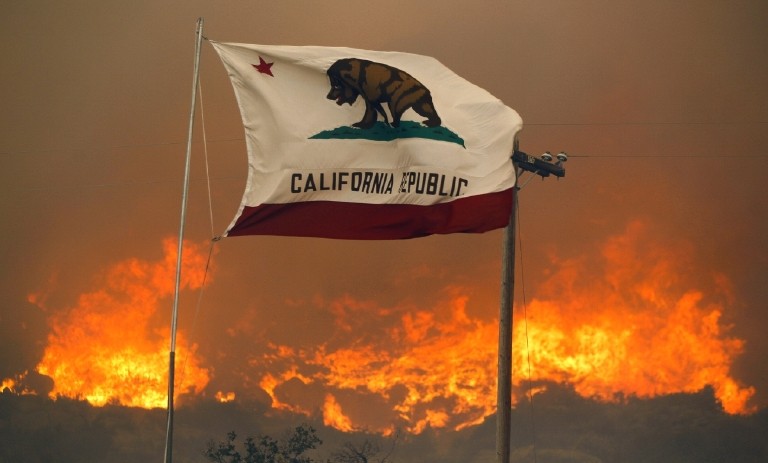
It’s not an exaggeration to declare June 30, 2025 as the Day Democracy Died in California. Democrats, who have a veto-proof supermajority in the legislature (30 of 40 in the Senate, 60 of 80 in the Assembly) and who hold all statewide elected offices, have become so extreme that they still have to resort to backroom dirty tricks to force their agenda through. Many California Republicans, being California Republicans, were complicit. It was one of the most shameful episodes in the history of the state’s politics — and that’s saying something. The ramifications will be felt statewide, and nationally, for a long time to come.
To understand why, we have to go a bit into the weeds. Stick with us. It’s important.
To summarize: In February state Senator Scott Wiener (D—San Francisco) introduced Senate Bill 677 (“SB 677”). The bill would have exempted virtually all new construction in California from environmental review. Not just housing, but new factories, new infrastructure projects, even new airports and airport expansions. About the only projects that would have remained subject to CEQA review were oil and gas facilities — and California isn’t building any of those anytime soon.
CEQA is one of the most consequential results of the third wave of the environmental movement, which began in the late 1950s and reached its zenith in the late 1960s and early 1970s. Along with the National Environmental Protection Act (NEPA), CEQA was the culmination of a half century of activism. For the first time in history, all new construction in the state became subject to rigorous environmental review. As the economy boomed in the aftermath of World War II — by 1955 the United States was responsible for nearly 80% of all global manufacturing output — the impacts on the natural world became impossible to ignore.
SB 607 immediately garnered intense, widespread opposition from environmental groups, organized labor, community advocacy groups, and cities. In March, 127 environmental groups led by heavyweights including the Sierra Club and the Natural Resources Defense Council wrote a letter to legislative leaders expressing their vehement opposition. Other notable opponents included the Union of Concerned Scientists, the California Audubon Society, the Planning and Conservation Society, and San Francisco Baykeeper.
In the face of this overwhelming popular opposition, Wiener gutted SB 607, replacing the text with what’s known as aspirational language, outlining what a future alternative bill might look like. However, in a preview of what was to come, he did so only after the bill had passed through three Senate committees — Housing, Local Government, and Appropriations — with only one NO vote. On May 23, Wiener and Senate President Pro Tem Mike McGuire (D—North Coast) released a joint statement celebrating the bill’s passage out of committee. However, they added this cryptic sentence: “Over the coming weeks, we’ll be collaborating on final language for SB 607 which will then be embedded in the state budget.”
Even though it had gone through the regular committee process and was prepared for a full floor vote in the Senate, five days after the joint statement Wiener gutted the bill. A week after that, and less than two weeks after the joint statement, Wiener pulled SB 607 altogether on June 5.
The “Trailer Bill” Bait and Switch
It was a bait and switch. Wiener had been negotiating with Governor Gavin Newsom and Senate Speaker Pro Tempore Mike McGuire (D–North Coast) to revive SB 607. Turns out that what they meant by “embedded in the state budget,” was that they intended to turn SB 607 into what’s known as a budget trailer bill. Trailer bills originally were intended as a means by which lawmakers could provide clarity or additional details regarding specific provisions of the annual state budget. They were intended to explain how or why this or that appropriation was included. As such, trailer bills don’t go through the normal legislative process. They do not go through committees, there’s no legislative analysis, and there is virtually no public input.
However, like so much arcane procedure in Sacramento (we’re looking at you, suspense files), over the years lawmakers warped trailer bills to serve purposes far beyond the original intent. They increasingly used trailer bills to pass consequential legislation. As Dan Walters observed at CalMatters in an insightful analysis last year, “Eventually, they ceased being just adjuncts to the budget and became vehicles for major changes in policy having little or nothing to do with the budget.”
Walters contends that trailer bills took off in 2010 when California voters approved Prop. 25 (remember that? Me, neither). Prop. 25 reduced the threshold for passage of the state budget from a two-thirds majority to a simple majority in both legislative houses. Prop. 25 was the icing on California’s one party state cake. The traditional two-thirds majority requirement at least gave Republicans a seat at the table. A simple majority meant not only would Republicans play no role, it also meant that the pendulum would swing farther toward the Democrats’ extreme left wing.
Walters noted:
Thereafter, Democratic governors and legislators would often draft last-minute bills containing sweeping policy changes, insert token $1,000 appropriations to tie them to the budget and pass them with little or no opportunity for the public or affected interests to know what was happening. Since trailer bills take immediate effect, they could not be challenged via a referendum ballot measure ….
The misuse of the trailer bill loophole finally became so blatant that voters passed another initiative in 2016, Proposition 54, requiring bills to be in print for 72 hours before final passage, although legislative leaders, who opposed the measure, often use parliamentary tricks to minimize opportunities to see the contents of trailer bills.
If you think this sounds undemocratic, you’re not alone. Prop. 54 passed by a wide margin. Yet in Sacramento, it’s business as usual. The trailer bills at issue here, AB 130 and SB 131 aren’t just workaday legislation. They make historic, profound changes to a landmark environmental law that has set norms, expectations, and rules in California for more than half a century. CEQA has been a model for dozens of similar laws around the country. All of which is why the previous bill, SB 607, received such intense blow back. Rather than heed the will of the people, California lawmakers up to and including Governor Newsom resorted to duplicitous mischief.
The thing is, everything they did is completely legal. A longtime lobbyist in Sacramento, who asked not to be named so as to speak freely, said, “This is how it works. Trailer bills have been part of the territory in the capitol since the 70s. They followed the rules.” Which is the distressing part. The people who represent 39 million Californians think nothing of resorting to subterfuge.
Wiener told CalMatters last week, “I’m not going to comment on the process or any of that.” Which is sort of like Charles Manson saying he has no comment on the stabbings or any of that. Wiener continued, “The people of California, I don’t think they care much about the timing.” This, ladies and gentlemen, is what we call projection.
Somehow, it gets even worse.
Newsom declared that he would not sign the budget unless and until the legislature approved AB/SB 131. That’s right: A single individual held the entire state politically hostage in order to get his way. It wasn’t bad enough that the legislature gave 39 million Californians less than four days to read and understand one of the most consequential bills in recent memory. The governor literally threatened to shut down the state over it.

“You thought you lived in a democracy? Oh, that’s hilarious!”
This isn’t how democracy works. Certainly not in the United States, and certainly not in the world’s fourth largest economy. Yet here we are, with politicians acting like we’re a 70s vintage banana republic. What’s the difference between the average California Democrat and Donald Trump these days? At least Trump looks you in the eye when he stabs you in the heart. California Democrats pretend to care about the people, about the little guy, the working class, the environment — then they stab us collectively in the back.
California Lawmakers Have Declared War on State Environmental Laws
There’s a second distressing aspect to this story. It wasn’t so long ago that the Democratic Party was the party that championed environmental protections. If yesterday’s action is any indication, they have utterly abandoned that commitment. During the public comment period of a hearing on AB/SB 131 in the Senate Budget Committee, dozens of speakers from environmental groups, collectively representing millions of members, spoke passionately in defense of CEQA. A spokeswoman from the Sierra Club declared the bills, “The worst attack on CEQA in this century. These broad exemptions will lead to bad projects that destroy our environment.”
She added, “At a time when public trust in government and Democratic leadership is at an all time low, you have this budget bill that was negotiated behind closed doors, with no input from the public or even other legislators. Transparency and accountability are essential to CEQA, and this budget trailer bill and the process by which it was developed, is the exact opposite of that.”
Again, this was someone from the Sierra Club, talking to Democrats. An exchange like that would have been unimaginable just a few years ago. California Democrats, while declaring their resistance to the Trump administration, particularly its anti-democratic/fascist tendencies and its assaults on the environment, are simultaneously engaging in anti-democratic maneuvers to pass a law that amounts to an assault on the environment.
Wiener claims that cities, nonprofits, and individuals have “weaponized” CEQA to stall or stop disfavored projects. Mind you, this is the same individual who proposed a bill last year that would have eliminated city councils’ ability to designate high fire danger severity zones (HFDSZs) within their boundaries, thus restricting such areas from development. Why? He claimed cities were “weaponizing” HFDSZs. Seriously. He said that. He really likes that word.
Need a drink yet?
Solving the Wrong Problem
CEQA isn’t perfect — no law is. In particular, it allows anyone in the state to sue to enforce its provisions. There’s no requirement that the plaintiff or plaintiffs be harmed by the project over which they are suing. The law created a cottage industry of environmental lawyers who made their livings filing (and defending) CEQA lawsuits. Which is where, allegedly, the trouble begins.
To hear some developers talk, you’d think that CEQA singlehandedly stymied desperately needed new construction in California, especially housing. To hear YIMBYs and their financial backers talk, you’d think CEQA is the reason for the state’s housing affordability crisis. In reality, there is broad disagreement over the extent to which CEQA has negatively impacted housing development. It’s far from settled, much less to the point that it would justify, if it ever could, this kind of anti-democratic maneuvering.
Moreover, this latest anti-democratic maneuvering is in service of a fatally flawed ideology: YIMBYism. YIMBYs insist that California has a housing crisis, and that the crisis is solely the result of insufficient supply. I’ve dismantled this argument previously, as have others, including the San Francisco Federal Reserve. Their May 2025 paper was literally called “Supply Constraints Do Not Explain House Price and Quantity Growth Across U.S. Cities.” What the YIMBY movement gets fundamentally wrong is the notion that supply is an economic driver. It is not; it is the product of many economic drivers operating — ideally — in concert. Start introducing a bunch of laws that throw that system into disarray inevitably makes it less efficient, less predictable, and less productive, and therefore, more expensive. CEQA isn’t the problem. Constantly shifting state laws, requirements, regulations, and mandates are.
Despite all evidence to the contrary, and based on nothing other than a simplistic tautology (“Housing is expensive because there’s not enough of it”), yesterday California lawmakers eviscerated the most important environmental law in state history.
Because profit.
Which is where the story goes from maddening to sinister. Make no mistake: Many California Democrats are bought and paid for by big tech, big finance, and big real estate, with a strong assist from big law. People like Scott Wiener do not represent their constituents, much less Californians in general. People like Wiener are errand boys and girls for those paymasters. It really is that simple. They’ve been selling us out for years. The scary thing now is that they no longer feel the need to even pretend to engage in the democratic process.
Advocates and activists may kill a bill or two here and there. The system, though, is worse than rigged. It’s poisoned. California Democrats won their supermajority by convincing a majority of Californians that they were the best people to represent their interests. Maneuvers like yesterday’s show that it doesn’t matter what letter is after your name, what party you belong to. Absolute power corrupts absolutely.
Your move, silent majority.
 the all aspect report