Decision says less about rebuilding and more about the state’s ongoing political and regulatory dysfunction

Be sure to SUBSCRIBE to the all aspect report for analysis, opinions, and the occasional tirade, the likes of which you won’t find anywhere else!
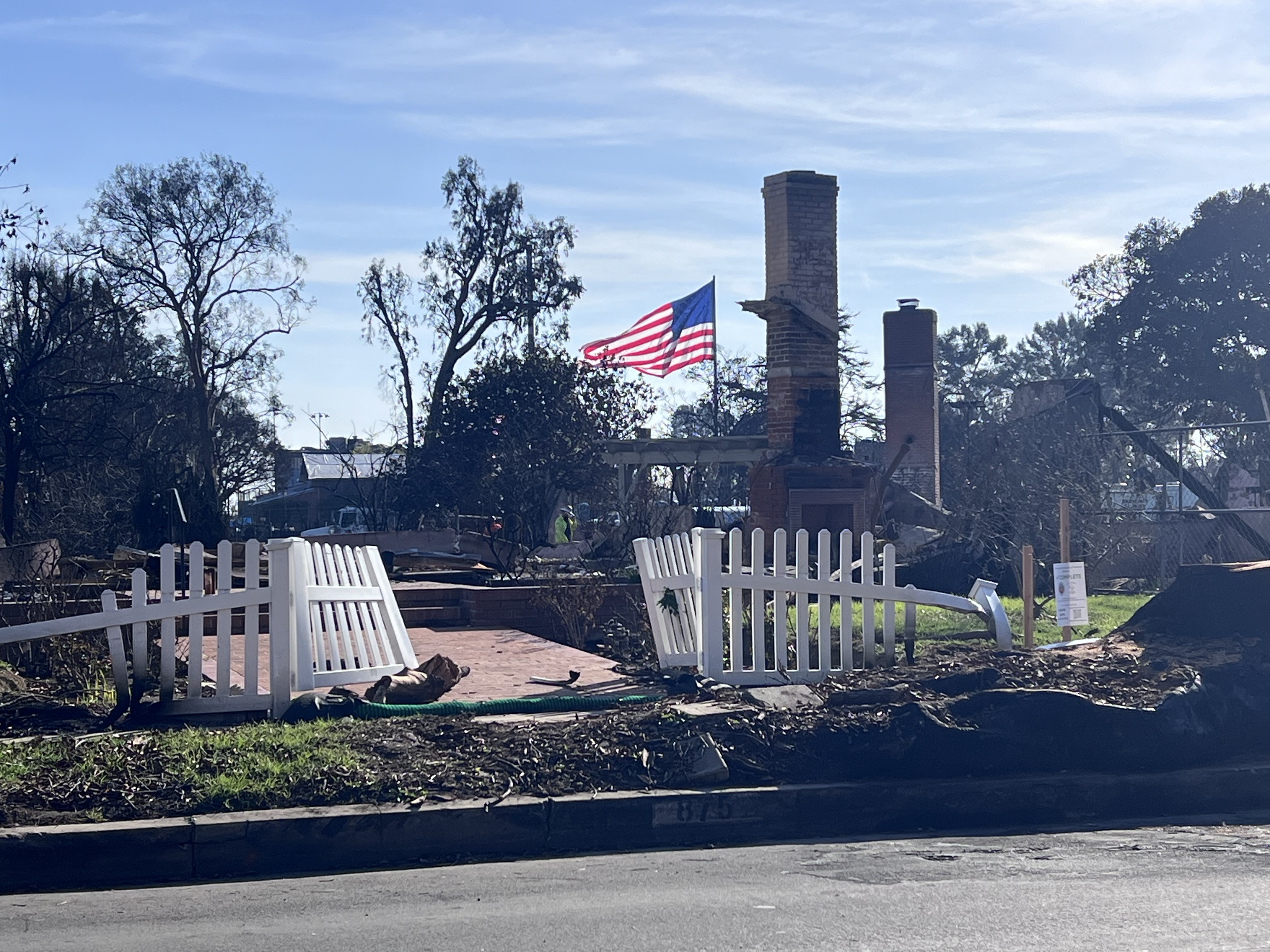
As part of continuing efforts to speed recovery in Altadena and the Pacific Palisades, last week California Governor Gavin Newsom signed an executive order suspending environmental reviews of utilities rebuilds. It’s the latest in a string of similar actions. On January 12, while the L.A. firestorms were still raging, Newsom suspended environmental reviews for rebuilding homes in Pacific Palisades and Altadena. With two strokes of his pen the governor abrogated laws that for 55 years have protected the state’s residents, neighborhoods, open spaces, wildlife, and natural resources. Speaking with Jacob Soboroff on NBC’s “Meet the Press,” Newsom said, “California leads the nation in environmental stewardship. I’m not going to give that up. But one thing I won’t give into is delay. Delay is denial for people: lives, traditions, places torn apart, torn asunder.”
As an aside, you will rarely hear a more Gavin Newsom-y sentence than that last one. Normal people would be content with the first clause. “Delay is denial for people.” Sure, got it. Short, to the point, with a little alliteration. Newsom, though, can’t help himself. He has to gussy it up with some flowery language. The Palisades and Altadena weren’t just torn apart, they were torn asunder. My god, people, traditions are being delayed! We must not delay traditions in places that have been torn asunder!
Anyway, the fact that Newsom and the political class believe it’s necessary to suspend the California Environmental Quality Act (CEQA) to speed rebuilding is a perfect encapsulation of everything that’s wrong with the state in the modern era. Practically from the moment the ink was dry on then-Governor Ronald Reagan’s signature that set the 1970 bill into law, CEQA has been a bugaboo to real estate developers. To be sure, it is a beast. Depending on which volume of California law you’re reading, it’s between 50 and 60 single spaced pages of detailed technical requirements. That’s around 18,000 words, the length of a novella. It has been used by environmental groups and others seeking to delay or block projects with which they personally disagree, whether or not they have any connection to the communities involved.
Ignoring economic realities
Nevertheless, it’s generally accepted that CEQA has done a lot more good than harm, and that complaints tend to be tend to be overstated. Politicians and developers push the narrative that the law is a significant factor behind California’s staggering costs of new housing construction. In reality, the costs of land, materials, and labor are much more consequential. That’s why much of the new construction that is happening in L.A. is in lower income communities. Land in places like West Florence is still reasonably cheap. For example, in 2022 a developer completed a new 125 unit market rate apartment building at 1654 West Florence Avenue. The developer paid just over $300,000 for an 8,000 square foot lot that was vacant except for a shack in which an illegal pot shop operated. In contrast, a 6,000 square foot lot in Santa Monica currently lists for just under $1.6 million. While CEQA is occasionally problematic in individual cases, these economic realities are the real culprits.
All of which it’s ironic to witness the political class’s recent assaults on CEQA. The false but prevailing narrative is that California’s housing costs are a result of insufficient supply. This narrative has been debunked time and again, most recently this month in a landmark study by the San Francisco Federal Reserve and the National Bureau of Economic Research. The researcher’s conclusion is right in the title: “Supply Constraints Do Not Explain House Price and Quantity Growth Across U.S. Cities.”
For the better part of half a century California’s political class staunchly defended CEQA. They defended it even in those situations when it was abused or produced absurd outcomes. For example, 15 years ago I represented an artichoke farmer in Half Moon Bay in his lawsuit against the California Environmental Protection Agency. During a particularly wet winter, part of his land flooded. Citing CEQA, CalEPA subsequently declared his farm a protected wetlands because a few ducks had taken up residence. Even though the floodwaters abated within six months and the ducks moved along, the agency retained its determination, preventing my client from growing crops on nearly 80% of his land. We eventually prevailed, but not until my client had been pushed to the brink of bankruptcy by two years of lost income, remediation costs, and legal fees (we gave him a deep discount).
Turning on a political dime
Flash forward a few years and the political class has waged virtually an all-out assault on CEQA. It’s a political and legal 180. The law has gone from unassailable to unjustifiable. The law itself, of course, hasn’t changed beyond a few tweaks at the edges. What has changed is that California, and particularly the California Democratic Party, has gone from championing the environment at all costs to championing real estate speculators and big finance against all comers. Along with their fellow travelers in big tech they’ve poured millions into political coffers over the last decade or so. They don’t like CEQA, ergo, the political class doesn’t like CEQA. It’s really that simple. No need to gussy it up or tear any traditions asunder.
Of course, Altadena and Pacific Palisades are the opposite of your typical construction zones where environmental reviews are an important part of the development process. They’re fire zones in which experts and the general public have only the vaguest idea of what might be lurking in the ash and debris. Incomprehensibly, FEMA is refusing to conduct even rudimentary soil testing in either community. Their response to concerned neighbors has amounted to, “This isn’t our first rodeo, based on previous fires we already know what soil testing would reveal, leave us alone to get the job done.”
Except, of course, they cannot possibly know what soil testing would reveal in these particular burn zones, particularly the Palisades. Along with homes, businesses, and vegetation, thousands of Teslas and other EVs burned. Thousands of home battery walls, rooftop solar, plasma big screen TVs, computers, phones, “smart” appliances, and home entertainment systems. No community like that has ever burned in the history of the country. Few communities like it ever existed until very recently.
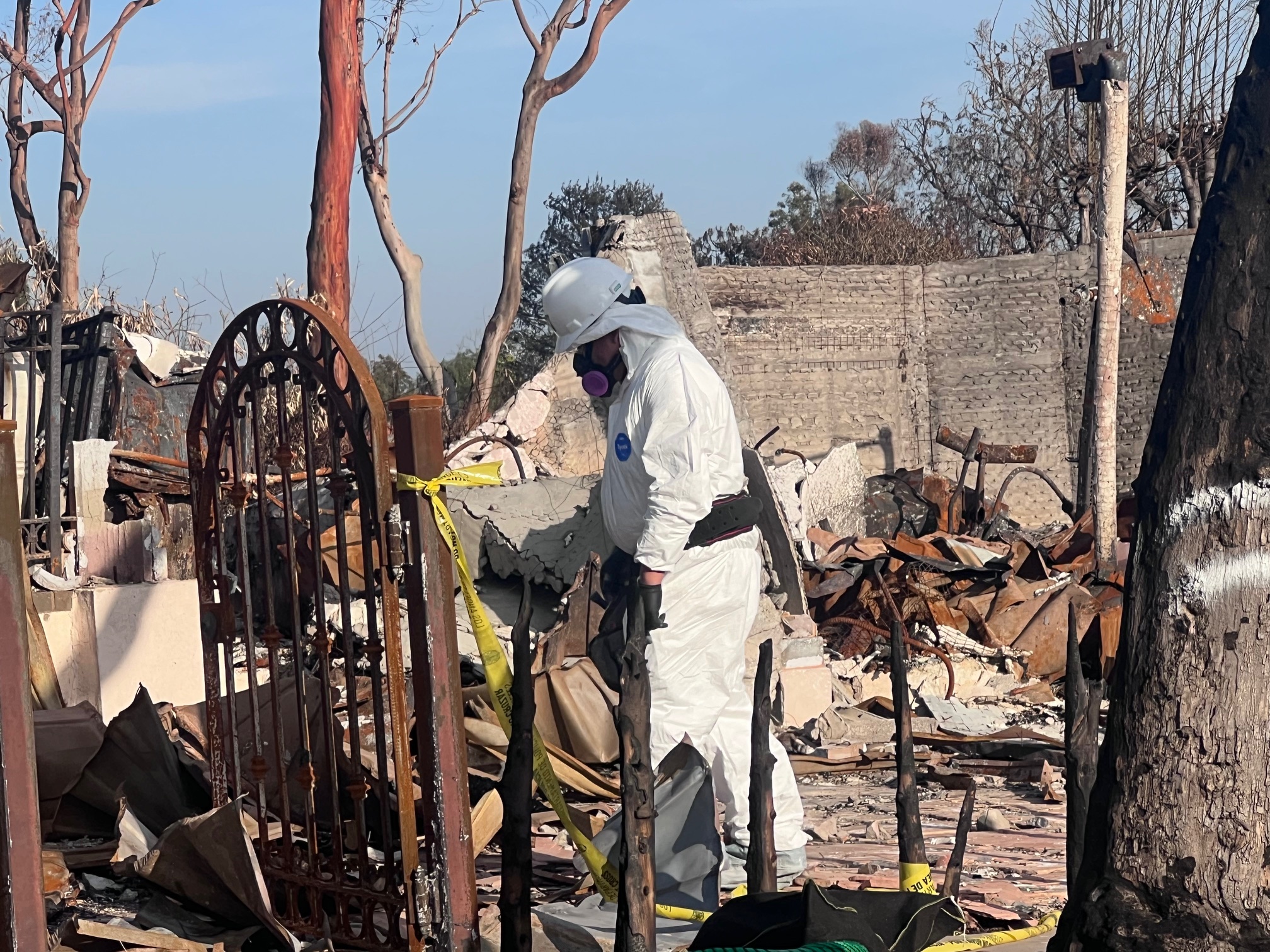

What could possibly go wrong?
Yet it is in that very place, a place that demands intensive environmental review, that Governor Newsom, L.A. Mayor Karen Bass, and others have determined it’s a good idea to suspend those reviews altogether. Moreover, it’s a decision based on the faulty premise that said reviews would unduly delay reconstruction.
Let’s walk through the – oh, let’s call it “logic.” California state lawmakers pass the most significant state environmental protection law in U.S. history, and spend 50 years adamantly defending it. Then, the political and fundraising winds shift. They turn on a dime and declare that same law to be an intolerably costly impediment to desperately needed new housing construction, basing their arguments on spurious assumptions and demonstrable falsehoods. Their campaign against the once sacred cow of state statutes culminates with its total abdication in a wildfire burn zone that is almost certainly an environmental catastrophe. As a result, 150,000 displaced Angelenos may be rebuilding their homes and their lives in the equivalent of Superfund sites.
Over the last 10 or 15 years California hasn’t been able to get out of its own way. We are in desperate need of new leadership in Sacramento. This current crop have proven to be as inept as they are corrupt. Politically they have the anti-Midas touch. Everything in their purview invariably turns to excrement. We’ve reached a point in the world’s fifth largest economy that we cannot even build a train. Despite four decades of efforts, California has failed to lay a single foot of track for a bullet train system that was supposed to connect L.A. and San Francisco. At one point in the early 2000s the French high speed rail company SCNF — they of that country’s immensely successful TGV high speed rail system — pulled out of discussions to be involved in the project. The company infamously told California officials that they were leaving for North Africa, which was “less politically dysfunctional.”
Now that same clown car of politicians is telling millions of Angelenos to trust them when they decide to skip environmental reviews during rebuilding after two of the most destructive wildfires in the state’s history.
What could possibly go wrong?
Like what you just read? Please consider donating to the all aspect report! We rely on donations to keep the virtual lights on and the good stuff coming.
Make a monthly donation
Make a yearly donation
Choose an amount:
Or enter a custom amount:
Contributions are securely processed by Stripe. Thank you!
Your contribution is appreciated.
Your contribution is appreciated.
DonateDonate monthlyDonate yearly
 the all aspect report