It’s Sunday, which means another assault on the way three-quarters of Americans choose to live
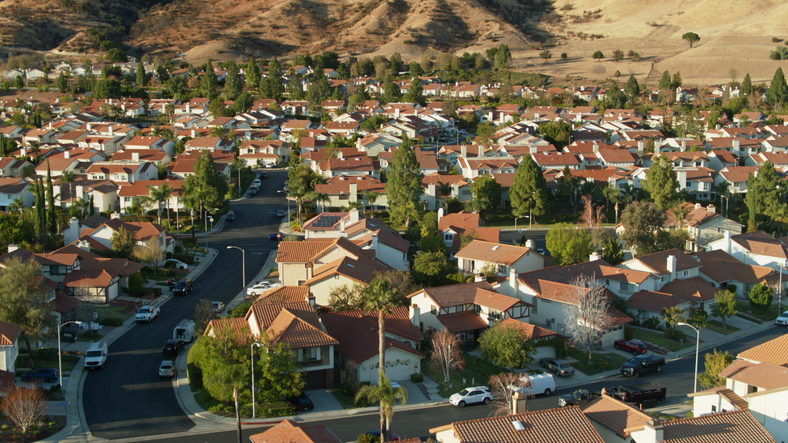

Here we go again. On Sunday the Los Angeles Times, which reliable sources claim was once a newspaper, published another attack on hardworking California homeowners. The op-ed, titled, “I’ve covered California’s homeless since before the word was used. This is what I learned,” excoriates the roughly 75% of Californians who live in single family and other low and light density neighborhoods. They are not individuals and families who have realized the American Dream of home ownership, or, for that matter, of renting the kinds of homes they want to live in. They are the scourge of desperately needed new housing, enemies of sustainability, and the root cause of homelessness. They’re probably also responsible for the recent outbreak of avian flu and the wreck of the Edmond Fitzgerald.
At the outset, and despite my snark, there’s no reason to doubt that the writer, Columbia University journalism professor Dale Maharidge, is sincere. He has been covering the issues of housing and homelessness since 1980 and clearly cares about what’s happening out here in the west. He’s a self-described Boomer and self-identified crusading, New Deal style journalist, taking another haymaker at The System. The problem is, he’s swinging at the wrong targets. Mr. Maharidge’s essay is earnest, well-sourced, and mistaken.
To wit: He embraces the narratives espoused by the so-called YIMBY movement, which stands for “yes in my back yard,” in contrast to their sworn enemies, NIMBYs, or “not in my backyard.” The subject of single family homes roils YIMBYs to the brink of madness. Mr. Maharidge doesn’t pull any punches himself. He paints a picture of selfish, even duplicitous homeowners who stymie new housing in order to preserve their own property values and prevent new people moving in. It’s a one-size-fits-all narrative that answers all the questions about California’s affordable housing and homelessness crises. You’ll hear nary a peep about the avaricious developers who build not what communities want and need but whatever will make them a tidy profit, affordability and local character be damned. No mention of the black and brown communities already being decimated by the upzoning and densification schemes that Mr. Maharidge and the YIMBYs embrace. Deafening silence when it comes to the corruption in L.A. and Sacramento that has so warped the state’s housing market, or the role of what many call the Homelessness Industrial Complex in the crisis of the unhoused.
It all comes back to wicked middle class homeowners who had the nerve to work hard and realize the dream of buying a house. Curse them for their personal responsibility and success, and off with their heads!
Mr. Maharidge asserts that homeowners aren’t just selfish, they’re sneaky. They talk in “coded language” about their concerns over “local control,” “overcrowding,” and “traffic” to obscure their true intentions. These are quotes from New York, but the specter appears generally. Many of them are “good liberals” who voted for Clinton and Obama, and later planted Black Lives Matter on their front lawns, but they don’t really mean any of it. Mr. Maharidge has been writing about housing and homelessness for four decades. He’s a professor at an Ivy League university. He ought to know better than to make sweeping generalizations about the 20 million Californians, or the 250,000,000 Americans, who live in suburban or rural communities, Democrat and Republican. He may as well call them “deplorables” while he’s at it.
A simple question: What if people’s opposition to certain housing policies is not “coded language” after all? What if millions of people, the vast majority in the hard-working middle class, genuinely value local democracy? What if they legitimately worry about the overcrowding and traffic congestion that often accompany badly planned, rushed-through-the-process housing developments? What if millions of Californians, and Americans, love their neighborhoods and want to retain the character and qualities that lured them there in the first place? What if they want their children and grandchildren to experience the same magic they did? That doesn’t make them “exclusionary,” much less “racist,” the favorite epithets of the YIMBY crowd. It makes them rational human beings. YIMBYs, in contrast, are hysterics.
Here’s a thought experiment: Imagine a local community that comes together to oppose a planned development of 500 new detached tract homes on currently untouched land. Each house will sit on a minimum of half an acre. It’s a development of million dollar McMansions. The neighbors’ concerns naturally would include local control, overbuilding where it isn’t appropriate or even desired, traffic, wildfire, and the despoliation of native habitat and open space currently enjoyed by all. Would Mr. Maharidge conclude those people are talking in “coded language” too? Or would he see sensible people making a sensible case against a bad idea?
When it comes to homelessness, he laments that more pro-housing policies in the 70s, 80s, and 90s “could have negated the presence of today’s tent cities.” Not “lessened,” not “eased,” but negated (incidentally, that’s probably not the word he was going for; “negate” means to deny the existence of or to nullify; presumably Mr. Maharidge meant something along the lines of “prevent”). He reduces a humanitarian crisis of historic proportions, with myriad causes and consequences, to a tautology: People are homeless because we didn’t build enough homes.
How can he make such an ironclad conclusion about the root causes of homelessness without addressing the central roles of mental illness and addiction? The University of California at San Francisco’s Benioff Homelessness and Housing Initiative (firmly in the housing first, YIMBY camp) estimates that more than 70% of homeless people in the state have mental or emotional health issues and/or suffer from addiction. It’s one of the few things that study got right, as I wrote previously in the Westside Current. Highly addictive and deadly drugs like fentanyl, synthetic meth, and tranq present challenges and dangers that literally never existed until recently, and have proven catastrophic in ways policymakers could not have imagined even a decade ago. Likewise, he makes no mention of the failed foster care system. Studies have found that adults who grew up in foster homes account for anywhere from 11% to 38% of the homeless population, even though they make up just 2.6% of the total population. No mention of a collapsed public education system which no longer prepares young people for successful, prosperous jobs and lives, leaving them particularly vulnerable to the factors that lead to homelessness. No mention of the equally broken pathway from incarceration back to civilian life. No mention of other states shipping their homeless to California.
It all comes back to housing, and nefarious homeowners.
Zoning is as zoning does
“Boomers,” he writes, “especially if they were white, got to buy houses, and then zoned everyone else out.” This gets the situation precisely backward: People buy houses because they are zoned for single family. How else would those houses have been built in the first place, unless the neighborhoods already were zoned for them? A more accurate statement is, “Local governments respond their constituents by zoning for the kinds of neighborhoods and homes they want to live and raise their families in.” Mr. Mahardige seems to suggest that people close on their homes on Sunday, and on Monday morning at 9:00a.m. are pounding on the door of their local councilmember, demanding zoning changes.
The document explaining L.A.’s zoning code is 178 pages long. That’s the summary. The code itself is 1,167 pages, and there are hundreds more pages of related regulations covering things like infrastructure requirements for new housing. On one hand, YIMBYs will point out that this sort of local complexity is exactly why we need state streamlining. In fact, the zoning code is what it is because L.A. is a big, sprawling, vastly complicated metropolis. The zoning code has to account for the Port of Los Angeles’s refineries and pipelines, flood plains in the Tujunga Wash in the north San Fernando Valley, wildland-urban interface (WUI) zones in the north and east of the city, industrial zones in the Inland Empire, skyscrapers in downtown L.A., various residential zones, wetlands, commercial, light manufacturing, heavy manufacturing, open spaces, submerged lands, gated communities, mobile home parks, airports, hospitals and health care facilities, schools, universities, homeless housing, low income housing, sports and entertainment facilities, even agricultural zones, to name a few. There is no way to “streamline” residential development in every single one of those zones without doing immense harm and sowing chaos. The city’s zoning regulations aren’t “exclusionary,” they are necessary. That’s not to say that there’s no room for improvement; of course there is. Government at all levels is notoriously inefficient, there are ways to cut the fat. But the overall zoning scheme has evolved over decades to reflect reality.
YIMBYs often point to the sordid history of “redlining,” by which cities used zoning to exclude non-white residents. While it’s true that the vestiges of those policies remain visible today, YIMBY polices are in the process of creating neighborhoods that are invisibly redlined: Gentrification that pushes lower income, and particularly lower income non-whites out of their neighborhoods, and upzoning schemes that target those lower income neighborhoods because that’s where developers can make the biggest bang for their buck, even as they price existing black and brown people out of their own homes. It’s not redlining, but in all too many places it might as well be.
In any event, does Mr. Maharidge really believe that millions of Californians are so concerned about issues related to the complexities of local zoning that they study local rules like the L.A. code, rules that are arcane even to most practicing attorneys? And that they’ve been that attentive for decades, down in the weeds with the consequences of R1A compared to RAS3 zoning? Of course they haven’t. Most people know and care as much about local zoning as they do about how their car’s engine works. They only pay attention when something goes wrong.
Which is something Mr. Maharidge gets right, albeit not for the reasons he sets forth. People are starting to wake up to what state legislatures are doing in terms of zoning, and they don’t like it. Mr. Maharidge should sit in on a meeting of Livable California or the California Alliance of Local Electeds (CALE). Both are grassroots groups that formed in response to the heavy-handed, one-size-fits-all approach of YIMBYs like state senator Scott Wiener (full disclosure, I volunteer with both groups).
First and foremost, both groups are more diverse than the average local YIMBY outfit. They represent a broad cross section of Californians, whereas YIMBY groups are creatures of Silicon Valley and Wall Street. Speaking of which, Mr. Maharidge should check out who bankrolls the campaigns of people like Mr. Wiener, and read this exposé by the AIDS Healthcare Foundation’s Housing is a Human Right campaign – not exactly a gang of MAGA Republicans – about truth behind the YIMBYs. Fun fact: according to the California Secretary of State’s campaign finance records, Mr. Wiener’s most recent contribution, on March 15, was $9,900 from the California Real Estate PAC.

Just doing as he’s told….
If Mr. Maharidge gave Livable or CALE a listen, if he looked into Mr. Wiener and read that exposé, he would learn that YIMBYs are not the champions of affordable housing they posture as. All their talk about diversity, affordability, and sustainability is just that, talk. He would learn about the powerful financial interests behind the movement, including Wall Street hedge funds, real estate behemoths like Blackrock, tech giants like Facebook, Silicon Valley venture capital firms, and state pension funds like CalPers, none of whom give the slightest damn about affordable housing, much less quality of life. Their singular mission is to hoover up as many single family neighborhoods as they can then leverage YIMBY housing legislation to build thousands of new stack and pack apartments. It’s pump-and-dump housing.
His conclusion borders on the incoherent: “Wiener’s push for apartment buildings in transit corridors had it right. Would this make parts of Los Angeles a little more like Manhattan? We can only hope so. If New York City is any guide, it would mean more vibrant neighborhoods and higher property values.”
Note to the good professor: We here in Los Angeles don’t want to be more like Manhattan. We love our city, warts and all. For that matter, there’s a reason millions of New Yorkers have moved to California over the decades, and not vice versa. You won’t find many people decamping from Manhattan Beach to Manhattan.
Moreover, hold the phone – he was just excoriating those greedy, white, homeowning NIMBYs for spending decades resisting new development to protect and increase their property values. Then he cites the least affordable major city in the country as the model solution, and promises that if we Angelenos follow suit our property values will go even higher? Again, this is incoherent.
Actually, suburbs are better for all races and income levels
Like the YIMBYs Mr. Maharidge reflexively labels anyone who opposes the YIMBY agenda a racist. Presumably, then, in his 45 year career he hasn’t spent a lot of time in Black single family neighborhoods like Leimert Park, Baldwin Hills, or View Park, or Latino single family communities like Pacoima, San Fernando, East L.A., and Highland Park.
And that’s where you see the soft racism at the heart of the YIMBY movement. YIMBYs, who themselves are overwhelmingly white, claim that they are fighting to make California affordable for people who cannot currently afford home ownership. That’s a dog whistle for “non white people.” It’s right there in Mr. Maharidge’s quote of a New York Assemblymember, who said, “A wealthy community, before they allow Black and brown people in, they’ll walk away from any amount of money.”
In YIMBYland, “wealthy” = “white.” It seems beyond their comprehension that home ownership is a nearly universal aspiration. In 2022, 73% of Americans lived in neighborhoods they described as suburban or rural. Maybe the YIMBYs should call up LeBron James and ask how he’d feel about a few hundred new low-income units, and the associated traffic, in his exclusive Brentwood enclave, or talk with some residents in View Park, aka “The Black Beverly Hills.” They would likely get some rather chilly receptions.
More practically, recent research strongly suggests that suburbs are better drivers of diversity, sustainability, and generational wealth than urban cores. So-called “urbanizing suburbs” combine many of the features people like about big cities – arts and entertainment, shopping, dining, vibrancy, walkability – with traditional suburban neighborhoods with detached homes and yards. Professor Cullum Clark at the University of Texas at Austin has written extensively on the subject. Among his very non-YIMBY findings:
- The 41 urbanizing suburbs in his team’s study experienced average population growth of 23.2% from 2010 to 2018, compared with 6.8% for the average U.S. metropolitan area.
- The Black population in these urbanizing suburbs almost doubled between 2010 and 2018, while the number of Asians increased 61% and Hispanics jumped more than 40%. Together, the three groups accounted for almost a third of the total population of these cities.
- Foreign-born people constituted about a fifth of the populations in urbanizing suburbs, above their overall 15.1% population share in metropolitan America.
- Median living standards were 39% higher in urbanizing suburbs than the average for metropolitan America as a whole, based on a measurement of median incomes adjusted for local living costs
- Living standards were 62% higher for Black households, 61% higher for Hispanic households and 40% higher for Asian American households in urbanizing suburbs in 2018 than for Black Americans in metropolitan America as a whole.
- Counties surrounding urbanizing suburbs saw 15% higher upward mobility, measured by a dataset developed by Harvard University economist Raj Chetty’s Opportunity Insights group.



The YIMBYs have seen the enemy, and it is all of us. Stock photos.
Taken as a whole, the research of Prof. Clark and others casts the entire YIMBY experiment into serious, if not fatal doubt. It also shines a light on yet another YIMBY blind spot: How actual people actually want to live their lives. There’s a reason major urban centers from San Francisco to Manhattan are struggling to staunch population loss. Most people don’t want to live in Manhattan, or downtown Los Angeles or San Francisco for that matter. They want houses, and yards, and tree lined streets. There’s a reason developers are struggling mightily to fill those brand new “stack and pack” apartments, which have a soul-deadening sameness to them. There’s a reason L.A.’s downtown core, despite two decades of development and investment, is facing a jaw-dropping 30% residential vacancy rate. There’s a reason San Francisco, the second densest city in the country, has a 12.7% residential vacancy rate. It’s not a white, black, brown, purple, or taupe issue. It’s not even an issue unique to this country. China has been suburbanizing at a torrid pace. It’s a human issue. But there is no room for humanity among the YIMBYs. Humans tend to get in the way.
Santa Monica: The canary in the YIMBYs’ coal mine
Mr. Maharidge should visit Santa Monica. Now that the rains have passed it’s a perfect time of year. Bay City embraced YIMBY-style transit-oriented density starting in the 1990s. Denny Zane, an OG YIMBY, was on the city council and served a term as mayor and pushed to make Santa Monica a model city of density, affordability, and transit.
Three decades later, the results are in: Santa Monica is the fifth least affordable city in the country, even though the current residential vacancy rate is officially 10.3% and may be as high as 15% to 17% when accounting for illegal Airbnb and other short term arrangements. The commercial and retail vacancy rate in the city’s downtown core is a staggering 48%. The population has decreased slightly over the last five years, meaning all the new construction isn’t attracting new residents. In contrast, the city’s homeless population has spiked. Between 900 and 1,500 homeless people languish on the streets and in its public spaces every day, with not so much an outreach worker to be seen. The city spends some $45 million on this population every year with no accountability and nothing to show for it. Transit usage was plummeting even before COVID provided the kill shot to the Big Blue Bus’s bottom line.
Make no mistake: Santa Monica is YIMBYism in full bloom. It simply doesn’t work. We have tried, and failed. The Bay City should be that model Denny Zane dreamed of. Instead, it’s a cautionary tale.
Astonishingly, despite population loss and the current surplus of residential housing, the state is forcing the city to approve another 13,600 units. At the city average persons per household of 1.95 that’s enough new housing for 26,520 people, or fully 30% of the current population – even as Santa Monica has been losing population at a rate of 1.6% per year since 2018. Worse, those unneeded new apartment buildings are replacing grocery stores and local businesses. They’re also destroying what is left of the city’s character, even its soul. Entire neighborhoods are indistinguishable from each other, even from other cities. Again, people are speaking and voting with their feet, sending a clear message that Santa Monica is approving housing few people want to live in. Many of the new stack and packs have banners out front offering of months of free rent, free luxury gym memberships, even cash bonuses, just to get warm bodies in the door. There’s a palpable sense of desperation.
The really worrying this is that local leadership’s hands are tied. Even if they know the new construction is not in their communities’ and constituents’ best interests, new state laws threaten cities like Santa Monica with lawsuits, fines, and, at the extreme, a complete state takeover of local planning and development decisions. This Sword of Damocles hangs over every single city in the state. Economic and even physical realities are being supplanted by the YIMBY ideology. YIMBYism isn’t sound public policy or macroeconomics, it’s a religious faith. That’s what makes it utterly resistant to actual experience, data, and facts.
Yet the YIMBYs, who practice a version of trickle down, “voodoo economics” that would make Ronald Reagan himself blush, envision this scenario in every corner of California. No neighborhood is safe. They have successfully pushed for those new state housing construction mandates that are simply unattainable. Again, the mandates defy reality. L.A.’s current mandate requires the city to permit and ensure construction of 456,643 new units by 2031, a physical impossibility. That would be enough housing for L.A. to add 1.23 million new residents in seven years, or 32% of the current population, at a time when L.A., like Santa Monica, is losing population. Where are those 1.23 million people going to come from? The YIMBYs cannot answer this most fundamental of questions. They don’t even bother trying.
Empty units with homeless people sleeping out front
When it comes to homelessness, Mr. Maharidge might be interested in knowing about the thousands of city-owned units, many of them in brand-new, just-completed buildings, that have been standing empty for as long as three years in L.A. and San Francisco. He might be interested in the scandalously corrupt nonprofits that receive millions in taxpayer dollars while leaving their units and shelters well below capacity, in many cases half empty. Overall, according to one recent estimate there are as many as 50,000 vacancies in San Francisco as we speak. I personally have documented dozens of new buildings the Housing Authority of the City of Los Angeles (HACLA) purchased, in part with COVID emergency funds, that are vacant to this day.

HACLA bought this brand new 128 unit market rate apartment building in South Los Angeles in February 2022 and slated it for homeless housing. It remains vacant today.
I’d also like to tell him about the incandescently irresponsible fiscal management of our city’s and state’s homelessness programs. According to a recent independent analysis, Los Angeles Mayor Karen Bass’s signature “Inside Safe” program is spending as much as $17,000 per month per person for housing in converted motels. The city is paying Four Seasons rates for rooms in squalid motels that otherwise would be charging by the hour. Meanwhile, the cost of new build units intended for homeless people in Los Angeles averages more than $837,000 and sometimes exceeds $1 million.
To put that in perspective, at current per unit costs, to house every one of the estimated 46,260 homeless people in L.A. would require $38.7 billion, more than three times the city’s entire annual budget, plus billions more annually to operate the properties and associated “wraparound services.” As it is, in the 2023-24 fiscal year budget the city has committed $1.3 billion to homelessness. That’s 10% of the city budget, spent on barely 1.25% of the population.
L.A. voters have overwhelmingly approved multiple sales tax and property tax increases specifically to fund homeless and low income housing. Turns out those selfish, greedy homeowners are awfully generous with their tax dollars, not to mention their donations to homeless charities and nonprofits.
California’s affordable housing reality is ugly and complicated
This is reality. It’s ugly, it’s messy, it’s complicated, and there are a lot of bad actors profiteering on the backs of our most vulnerable and suffering. State policies are exacerbating the very crises the political class promises to solve.
Mr. Wiener isn’t a champion of affordable housing, he’s an errand boy for the likes of Mark Zuckerberg, Reed Hastings, and the California real estate industry. The entire YIMBY movement is starting to come out of the closet, as it were, as the property speculators they really are. They are no different than the robber barons of yore, they’re just a lot better at obscuring their true intentions.

Ladies and gentlemen, the YIMBYs have a proposal for your neighborhood….
Consider a new start-up called YIMBY+, which launched recently in New York, New Jersey, Chicago, and Miami. Their pitch? “With YIMBY+, you can navigate the real estate landscape in the New York metro area like never before. YIMBY+ combines the rich dataset of New York YIMBY with Rebar Radar’s advanced digital twin technology stack, offering an immersive 3D experience and a wealth of real-time information at your fingertips.”
Any questions? Still think the housing first YIMBY crowd cares about affordability and sustainability? Or was that the wool they pulled over Californians’ eyes while building a real estate juggernaut?
This isn’t just sour grapes. The lies and misinformation that the YIMBYs spread have real consequences. They prevent sound policies from even being broached, much less debated and implemented. They provide cover for bad actors whose motivations are purely financial. Though he thinks he’s part of the solution – and as I said at the outset I have no doubt about his sincerity – Mr. Maharidge is part of the problem. Until California, and the country, tackle the real scourges – corrupt politicians, greedy developers, tech oligarchs, and the vast universe of financial interests behind the current housing mandates, and the addiction and mental health crises that are the primary drivers of hardcore homelessness – we will continue to watch home values increase as people’s ability to afford them decreases.
Unfortunately, columns like Mr. Maharidge’s push us further away from sound, effective solutions.

 the all aspect report
Must reading for every politician in the city of Los Angeles and in the state of California…
barbara kohn
barbara@kohn.com
b
LikeLike